Mix. Drink. Enjoy.
Discover amazing cocktail recipes and elevate your mixology game
Mix. Drink. Enjoy.
Discover amazing cocktail recipes and elevate your mixology game
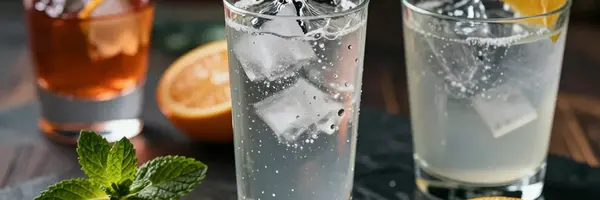
Of all the classic spirits, gin produces the greatest range of iconic cocktails. The Negroni, the Martini, the Tom Collins, the French 75 — these aren't just popular drinks, they're the foundations of cocktail culture as we know it. What makes gin so special for mixing is its botanical complexity: juniper, citrus, herbs, and spice give every drink a built-in depth that vodka simply can't match. This guide covers eight essential gin cocktails, from the bittersweet simplicity of the Negroni to the delicate floral elegance of the Aviation, with the recipes and technique notes you need to make them well at home.
Before diving in, it's worth knowing that gin comes in several distinct styles. London Dry gin is the classic: juniper-forward, crisp, and dry — think Beefeater, Tanqueray, or Bombay Sapphire. It's the most versatile for cocktails and the right default choice for nearly everything on this list. Contemporary or New Western gins dial back the juniper and push citrus, floral, or herbal botanicals to the front — they work beautifully in lighter cocktails like the Bee's Knees or Gimlet. As Difford's Guide notes, gin is unique among spirits in that the botanical recipe is part of the brand's identity, making each bottle genuinely distinct in ways that matter for cocktails.
The Negroni is one of the greatest cocktails ever conceived. Equal parts gin, Campari, and sweet vermouth — stir over ice, strain into a rocks glass over a large cube, garnish with an orange twist. That's it. The beauty is in the balance: gin provides the botanical backbone, Campari brings bittersweet orange complexity, and sweet vermouth adds depth and a slight herbal sweetness. It's a drink that tastes like it took skill to make, but the recipe is literally three equal parts. The Negroni has been named one of the world's most popular cocktails for years running, and for good reason — it's essentially impossible to get wrong once you understand the ratio. For a coffee-inflected riff, try our Coffee Negroni.
The Gin and Tonic deserves more credit than it gets. Done properly — good gin, quality tonic, fresh lime — it's one of the most refreshing drinks in existence. Pour 2 oz gin into a highball glass packed with ice, top with 4 oz of premium tonic water, squeeze in a lime wedge. The tonic matters here: the cheap stuff is cloying and chemical. A quality tonic with real quinine bitterness elevates the gin's botanicals rather than masking them. According to PUNCH, the Gin and Tonic remains one of the most ordered cocktails globally and is currently experiencing a craft renaissance with artisan tonics and gin-forward serves.
The Bee's Knees is a Prohibition-era cocktail that deserves its modern revival. Shake 2 oz gin, 3/4 oz fresh lemon juice, and 3/4 oz honey syrup hard with ice and strain into a chilled coupe. The honey syrup (equal parts honey and warm water, stirred to combine) brings a floral sweetness that pairs magnificently with gin's botanicals. It's a more elegant alternative to the standard Sour format, and one that highlights why gin's botanical character makes it so interesting in citrus cocktails.
The French 75 is the gin cocktail for celebrations. Shake 1.5 oz gin, 3/4 oz lemon juice, and 1/2 oz simple syrup with ice, strain into a Champagne flute, and top with sparkling wine or Champagne. The result is bright, effervescent, and elegant — a lemon sour lifted into something special by the bubbles. It's an ideal brunch or aperitif cocktail and consistently impresses guests. If you don't have simple syrup, our guide to making simple syrup at home takes about five minutes.
The Gimlet is gin at its most stripped-back. Shake 2 oz gin with 3/4 oz fresh lime juice and 3/4 oz simple syrup, strain into a chilled coupe or rocks glass. That's three ingredients — gin, citrus, sweetener — producing a cocktail that's clean, bracingly tart, and deeply satisfying. It's also a useful testing drink: because there's nowhere for flaws to hide, it rewards good gin and fresh-squeezed lime. Use bottled lime juice here and you'll notice immediately.
The Aviation is one of the most beautiful cocktails in color and concept. Shake 2 oz gin, 1/2 oz maraschino liqueur, 1/4 oz crème de violette, and 3/4 oz lemon juice with ice, then strain into a coupe. The crème de violette turns the drink a pale lavender-blue that genuinely looks like a sky at dusk. It's a pre-Prohibition recipe that nearly disappeared when crème de violette became unavailable, then was revived with the craft cocktail movement. As Liquor.com notes, the Aviation has become one of the signature cocktails of the modern gin renaissance.
The Gin Fizz is a classic highball: gin, lemon juice, simple syrup, shaken hard with ice and topped with soda water in a tall glass. It's the daytime cousin of the Gimlet — slightly longer, more refreshing, more sessionable. The key to a great Fizz is shaking before adding the soda, then topping gently so the bubbles don't dissipate. If you want to push it further, the Ramos Gin Fizz adds cream and egg white for a frothy, milkshake-like texture that's one of the most theatrical cocktails in the classic canon.
The Gin Basil Smash is a more modern addition to the gin canon, created by Hamburg bartender Jörg Meyer in 2008. Muddle a generous handful of fresh basil in a shaker, add 2 oz gin, 3/4 oz lemon juice, and 3/4 oz simple syrup, shake hard with ice, and double-strain into a rocks glass over ice. The basil's peppery, herbal oil melds seamlessly with gin's botanicals, creating something genuinely different from standard citrus sours. For a fruitier take on herb-forward gin cocktails, try the Strawberry Basil Smash.
A few principles that improve every gin cocktail. First, spirit-forward drinks (Negroni, Martini) should always be stirred, not shaken — stirring achieves the right dilution and texture without the cloudiness that shaking introduces. Cocktails with citrus should be shaken. Our guide to proper cocktail techniques covers this in detail. Second, chill your glassware — rinse a coupe or Martini glass with ice water before straining any spirit-forward gin cocktail into it. The difference is significant. Third, use fresh citrus always: gin's delicate botanical character is overwhelmed by the chemical aftertaste of bottled juice. Explore our full gin cocktail collection for more inspiration, including the elegant Last Word, the forgotten Clover Club, and many more.
London Dry gin is the most versatile and widely available style — its juniper-forward, dry character works in virtually any gin cocktail from a Negroni to a Gin & Tonic. New Western or contemporary gins are lighter on juniper and more citrus- or floral-forward, making them better suited to delicate cocktails like the Bee's Knees or Aviation. For most people starting out, a solid London Dry in the $25–$40 range is the right first bottle.
A Negroni is equal parts gin, Campari, and sweet vermouth — it's bold, bittersweet, and ruby red. A Martini uses dry vermouth (not sweet) and no Campari, resulting in a drier, more delicate drink typically served very cold. Both are stirred, not shaken, and both showcase gin as the star, but they're very different in flavor: the Negroni is assertively bitter and sweet while the Martini is clean and spirit-forward.
It depends on the cocktail. Drinks that are all spirit — like the Negroni or Martini — should be stirred. Stirring chills and dilutes the drink gently while keeping it silky and clear. Cocktails that contain citrus juice or egg white — like the Bee's Knees, Gimlet, or Ramos Gin Fizz — should be shaken. Shaking incorporates the juice, aerates the drink, and achieves a different texture.
The Gin and Tonic is the simplest gin cocktail — add ice to a glass, pour 2 oz of gin, top with tonic water, and garnish with lime. The Gimlet is nearly as easy: just gin and lime juice, shaken and strained. Both require minimal equipment and produce consistently good results.
Gin's dominant flavor comes from juniper berries, which give it a piney, slightly resinous taste. Beyond juniper, most gins contain a blend of botanicals — citrus peel, coriander, angelica root, cardamom — that contribute citrus, herbal, and spicy notes. The exact profile varies by brand and style: London Dry gins are crisp and juniper-led, while contemporary gins may be floral, fruity, or cucumber-forward.
The best entry point into gin cocktails is whichever one sounds most appealing to you right now. If you want something bold and complex, start with the Negroni. If you want something light and citrusy, try the Bee's Knees. If you want impressive with minimal effort, make a French 75. All eight recipes above are in our gin cocktail collection, and once you've worked through the classics, browse our full article library for guides on technique, equipment, and the other great spirits. Cheers.