Mix. Drink. Enjoy.
Discover amazing cocktail recipes and elevate your mixology game
Mix. Drink. Enjoy.
Discover amazing cocktail recipes and elevate your mixology game
Posted: July 14, 2026
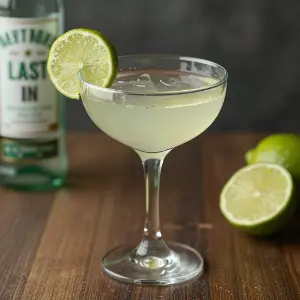
The Last Word is a Prohibition-era classic built on rare equality: equal parts gin, green Chartreuse, maraschino liqueur, and fresh lime juice, shaken into a herbal, tart, floral, and complex cocktail unlike almost anything else in the classic canon. It sits among the site's other Prohibition-born gin drinks like the Aviation and Bee's Knees, though its equal-parts structure and intensely herbal Chartreuse make it one of the more demanding, distinctive drinks in that whole category.
The Last Word is generally traced back to the Detroit Athletic Club, a private social club in Michigan, where its invention is credited to Frank Fogarty, a vaudeville monologist known for always getting the final laugh — a fitting inspiration for a cocktail meant to have the last word in any conversation. The earliest known published recipe appears in Ted Saucier's 1951 book Bottoms Up!, but the drink largely disappeared from circulation for the next half-century, unremarked upon even as classic cocktail revival movements picked up steam elsewhere. Its rediscovery came in 2003, when Seattle bartender Murray Stenson came across the recipe while researching old cocktail manuals and added it to the menu at the Zig Zag Café, a small bar that would go on to become legendary in craft cocktail circles. The drink became a regional sensation in Seattle almost immediately, then spread outward to New York, Chicago, and San Francisco as traveling bartenders carried the recipe with them, eventually becoming a fixture on serious cocktail menus worldwide. The Detroit Athletic Club itself later reclaimed the drink as part of its own heritage, returning it to its menu in 2009 and even naming a rooftop lounge after it — a full-circle moment for a cocktail that spent nearly fifty years forgotten before Stenson's rediscovery reignited the entire modern fascination with equal-parts drinks, a story documented in detail by Seattle Met's oral history of the Last Word's revival.
Gin supplies a clean, juniper-forward foundation, while green Chartreuse — a French herbal liqueur made from a secret blend of over 130 plants and herbs by Carthusian monks — brings intense, almost overwhelming herbal complexity that dominates the first sip for anyone unfamiliar with it. Maraschino liqueur cuts through that intensity with a distinctive cherry-pit sweetness that reads as more floral and almond-like than fruity, and fresh lime juice adds the acidity needed to keep all three stronger ingredients in balance. The result is strong without tasting harsh, and genuinely complex without becoming confusing — herbal, citrusy, sweet, and boozy all in careful proportion, a flavor experience unlike most other classic cocktails precisely because Chartreuse itself has no real substitute.
Shake 0.75 oz gin, 0.75 oz green Chartreuse, 0.75 oz maraschino liqueur, and 0.75 oz fresh lime juice with ice until well chilled. Strain into a chilled coupe glass. No garnish is traditionally required, though a brandied cherry is sometimes added. The equal-parts ratio is essential to the drink's character — unlike most sours, where citrus and sweetener play supporting roles to a dominant spirit, the Last Word asks all four ingredients to carry equal weight, which is part of what makes it feel so unusual and so rewarding once the balance clicks.
The Last Word's equal-parts template has become one of the most influential formulas in modern cocktail-making, spawning countless riffs across different spirits. The Ultima Palabra swaps gin for mezcal and adds an equal part of pineapple juice, using the fruit's sweetness to round out mezcal's smoky intensity against the Chartreuse. The Dublin Minstrel replaces gin with Irish whiskey while keeping Chartreuse, maraschino, and lime intact, producing a warmer, maltier take on the same structure, two of the many riffs cataloged in Paste Magazine's roundup of Last Word variations. For drinkers who enjoy the Last Word's herbal complexity but want something built around bitter Italian liqueurs instead, the site's Negroni offers a different but equally influential equal-parts formula.
A chilled coupe glass is the standard serve, keeping the presentation simple and letting the drink's pale green color show through. It's a serious, contemplative sipping cocktail best suited to a dedicated cocktail bar or a home bartender's more ambitious evening, rewarding slow, attentive drinking rather than quick consumption, in the same reflective spirit as the site's Gimlet. Its herbal intensity makes it a natural pairing for the same audience drawn to the site's Gin Basil Smash, another gin cocktail that leans into bold, unconventional flavor rather than easy crowd-pleasing sweetness.
Few cocktails illustrate the modern craft revival's core appeal as clearly as the Last Word: a genuinely excellent drink, invented decades before Prohibition ended American cocktail culture as it existed, sat forgotten in a single out-of-print book until one curious bartender happened to flip past it. Murray Stenson's rediscovery didn't just resurrect one cocktail — it helped ignite an entire movement of bartenders digging through old manuals looking for other lost equal-parts drinks, fundamentally shaping how the craft cocktail renaissance approached historical recipes. For drinkers exploring gin's more adventurous side beyond the site's Gin Fizz and other easier classics, the Last Word remains one of the best possible starting points, covered alongside other essential picks in the site's guide to the best gin cocktails to make at home.