Mix. Drink. Enjoy.
Discover amazing cocktail recipes and elevate your mixology game
Mix. Drink. Enjoy.
Discover amazing cocktail recipes and elevate your mixology game
Posted: July 14, 2026
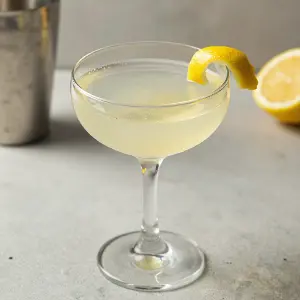
The Bee's Knees is a Prohibition-era gin sour built from just three ingredients — gin, fresh lemon juice, and honey syrup — that comes together into a bright, silky, floral-sweet cocktail deceptively simple for how well-balanced it is. It belongs to the same lineage of Prohibition-born gin classics as the site's Aviation and Last Word, sharing that era's fondness for dressing up rough spirits with just enough sweetness and citrus to make them shine.
The Bee's Knees emerged during American Prohibition, when homemade "bathtub gin" — distilled or redistilled at home, often crudely and without much quality control — was common, and bartenders needed a way to mask its rougher edges. Honey and lemon proved an especially effective fix, smoothing out harsh, poorly made gin into something genuinely pleasant to drink. Its exact origin is contested between two competing stories: one credits Frank Meier, the Austrian-born head bartender at the Ritz Paris's Bar Hemingway, who is said to have created the drink around 1921 when the hotel's Café Parisien first opened; the other, drawn from a 1929 newspaper article, attributes it to Margaret "Molly" Brown, the American socialite later immortalized as the "Unsinkable" Molly Brown for surviving the sinking of the Titanic. Whichever story is true, the drink's name borrows directly from 1920s American slang, where "the bee's knees" was a popular way of saying something was simply the best — the same playful, exuberant vocabulary that gave the era other phrases like "the cat's pajamas," a history detailed by Ohio History Connection's account of Prohibition-era bathtub gin and the Bee's Knees.
Gin supplies a dry, botanical backbone, its juniper and citrus notes providing structure without dominating the drink. Fresh lemon juice adds sharp, clean acidity up front, while honey syrup rounds everything out with a warmer, more complex sweetness than plain sugar can offer — honey's floral undertones linger through the finish in a way granulated sugar simply doesn't. The overall balance is bright and citrus-forward at first sip, settling into a smooth, slightly floral sweetness on the back end, with gin's dry character reasserting itself in the finish. It's a genuinely elegant drink for how minimal its ingredient list is, which is a large part of why it's remained a bartender favorite for a century.
First, make honey syrup by combining equal parts honey and warm water, stirring until fully dissolved — honey alone resists mixing into cold liquid and tends to clump, so pre-diluting it into syrup is essential. Shake 2 oz gin, 0.75 oz fresh lemon juice, and 0.75 oz honey syrup with ice until well chilled, then strain into a chilled coupe glass. No garnish is strictly traditional, though a lemon twist is a common addition. A milder honey, like wildflower or clover, generally works best, since a stronger, more assertive honey variety can easily overpower the drink's citrus and gin — advice also given by Difford's Guide's Bee's Knees recipe.
The Bee's Knees' minimal formula invites plenty of small, thoughtful tweaks. Infusing the honey syrup with fresh herbs like thyme or rosemary while it's still warm adds an herbal layer that plays well against the gin's own botanicals. A different honey variety — orange blossom is especially popular — can shift the drink's floral character noticeably, since honey's flavor varies dramatically depending on which flowers the bees foraged. Some bartenders add a splash of orange juice, a tweak noted as far back as David Embury's 1948 cocktail writing, for extra brightness. For drinkers who enjoy the gin-and-citrus format but want more herbal complexity, the site's Gin Basil Smash takes a similarly minimal approach in a different flavor direction, while a gin lover wanting something drier might prefer the classic Gimlet.
A chilled coupe glass is the traditional serve, keeping the presentation elegant and in keeping with the drink's Jazz Age origins. A lemon twist is the most common garnish, though the drink is often served entirely unadorned. It's a versatile, dressed-up cocktail suited to cocktail parties, dinners, or any occasion calling for something more refined than a simple gin and tonic, occupying similar sophisticated territory to the site's Gin Fizz and the herbaceous Negroni.
The Bee's Knees has enjoyed a substantial revival alongside the broader craft cocktail movement, and it's easy to see why: it requires no rare or hard-to-find ingredients, no elaborate technique, and delivers a genuinely well-balanced drink using just gin, lemon, and honey. Its Prohibition-born backstory — a drink invented specifically to make bad homemade gin taste good — also gives it a built-in narrative that modern bartenders and drinkers alike find appealing. A century after bathtub gin necessitated its creation, the Bee's Knees remains proof that some of the best cocktails come from solving a practical problem rather than chasing novelty, a lesson shared with other simple, three-ingredient classics in the site's guide to the best gin cocktails to make at home.