Mix. Drink. Enjoy.
Discover amazing cocktail recipes and elevate your mixology game
Mix. Drink. Enjoy.
Discover amazing cocktail recipes and elevate your mixology game
Posted: July 14, 2026
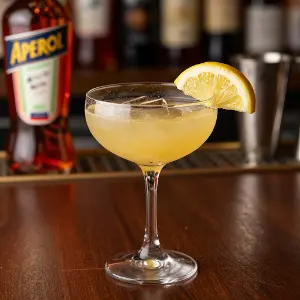
The Paper Plane is a modern equal-parts cocktail combining bourbon, Aperol, Amaro Nonino, and fresh lemon juice into a perfectly symmetrical drink that balances bitter orange, herbal alpine amaro, bourbon warmth, and citrus tartness. It's a direct descendant of the Prohibition-era Last Word, borrowing that classic's equal-parts structure and applying it to a wholly different, distinctly American set of ingredients, and it stands alongside Sam Ross's other modern classic, the Penicillin, as one of the defining cocktails of the 2000s craft revival.
The Paper Plane was created in 2008 by Sam Ross, the same bartender behind the Penicillin, as a favor for his friend Toby Maloney of Chicago's The Violet Hour. Maloney had asked Ross to help develop a sipper for The Violet Hour's summer cocktail menu, and Ross — drawing directly on the equal-parts structure of the Last Word, itself only recently rediscovered at the time — built a bourbon version using Aperol, Amaro Nonino, and lemon juice. Ross originally used Campari instead of Aperol, but switched it after a few days of testing, deciding Aperol's lighter, less aggressively bitter profile struck a better balance against the bourbon and amaro. The drink takes its name from "Paper Planes," the M.I.A. song that happened to be playing at the bar the night Ross finalized the recipe. Its equal-parts format — easy for bartenders to remember, easy to teach, and easy to scale — helped it spread quickly through cocktail bars nationwide, and in 2020 the International Bartenders Association formally added it to its official list of recognized cocktails, cementing its status as one of the very few 21st-century drinks to earn that recognition, a rise chronicled in detail by PUNCH's history of how the Paper Plane became a modern classic.
Bourbon provides warmth, caramel, and oak, giving the drink its backbone and grounding what could otherwise feel like a purely bitter, citrus-forward cocktail. Aperol adds bittersweet orange flavor with a lighter touch than Campari would bring, while Amaro Nonino contributes a more complex, barrel-aged bitterness scented with orange zest, thyme, and warm spice. Fresh lemon juice ties the whole mixture together with bright acidity. The overall balance is boozy, bitter, and citrusy all at once — sweet and tart up front, with bourbon's warmth and the amaro's herbal complexity lingering through the finish, similar in spirit to the layered bitterness found in the site's own Boulevardier.
Shake 0.75 oz bourbon, 0.75 oz Aperol, 0.75 oz Amaro Nonino, and 0.75 oz fresh lemon juice with ice until well chilled. Strain into a chilled coupe glass. No garnish is traditionally required, keeping the presentation as clean and minimal as the ingredient list itself. The equal-parts ratio is essential — like the Last Word before it, the Paper Plane depends on all four ingredients carrying equal weight rather than one dominant spirit supported by smaller amounts of everything else.
Amaro Nonino Quintessentia remains the preferred choice for most bartenders, but several substitutes have become accepted variations in their own right. Swapping in Amaro Montenegro produces a lighter, more floral drink with notes of dried fruit and orange peel, while Averna shifts the profile darker and more herbally bitter, with the drink losing some of its bright orange color in the process. Some bartenders swap Amaro Nonino for Grand Marnier plus a dash of bitters for a sweeter, more straightforwardly orange-forward riff, one of several substitutions detailed in Wine Enthusiast's guide to the Paper Plane. For drinkers who enjoy the Paper Plane's bittersweet balance but want a simpler, more classic profile, the site's Aperol Spritz offers Aperol's bittersweet orange character in a lighter, more effervescent format.
A chilled coupe glass is the standard serve, keeping the presentation elegant and understated. No garnish is traditional, letting the drink's balanced flavor speak for itself. It's a sophisticated after-dinner or cocktail-hour sipper, well suited to the same crowd that appreciates the site's Old Fashioned, but with more bittersweet, Italian-influenced complexity layered in.
The Paper Plane's rapid ascent to modern-classic status — culminating in its official IBA recognition just twelve years after its creation — reflects how effectively it borrows the best structural idea from a Prohibition-era favorite and applies it to entirely fresh ingredients. Its equal-parts format makes it nearly foolproof to recreate at home or teach to a new bartender, while its combination of American bourbon and Italian bitter liqueurs feels genuinely novel rather than derivative. Covered alongside other essential picks in the site's guide to the best bourbon cocktails for whiskey lovers, the Paper Plane stands as clear proof that great cocktail innovation didn't stop with the classics of the 1920s. Its success has also encouraged bartenders to keep mining the equal-parts format for new combinations, much the way the site's own Negroni has inspired its own long list of modern riffs.