Mix. Drink. Enjoy.
Discover amazing cocktail recipes and elevate your mixology game
Mix. Drink. Enjoy.
Discover amazing cocktail recipes and elevate your mixology game
Posted: August 1, 2026
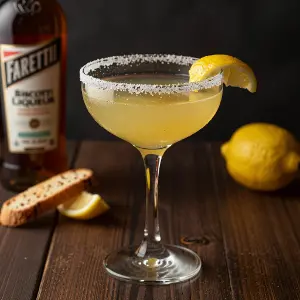
The Tuscan Sidecar is an elegant riff on one of the classic cocktail canon's great achievements, replacing the standard triple sec or Cointreau of the original Sidecar with Biscotti Liqueur and pairing it with the rich complexity of cognac and the sharpness of fresh lemon juice. The result is a Sidecar variation of genuine sophistication — the French brandy tradition meeting the Italian biscotti tradition over a shared appreciation for the finer things.
The Sidecar is one of the great golden-age cocktails, invented in Paris during or shortly after World War I and attributed variously to Harry MacElhone at Harry's New York Bar, Frank Meier at the Ritz Bar, or Pat MacGarry at Buck's Club in London. Its formula — spirit, orange liqueur, lemon juice in roughly equal thirds — is one of the most harmonious in the cocktail canon, and its descendants include the Margarita, the Cosmo, the Kamikaze, and dozens of other spirit-citrus-orange liqueur combinations. The Tuscan Sidecar adapts this classic formula by substituting the original's orange character (from triple sec or Cointreau) with the almond-fennel-caramel character of Faretti Biscotti Famosi. It is a substitution that works because, like triple sec, biscotti liqueur is sweet, aromatic, and lower in proof than the base spirit — it functions as a modifier that balances and sweetens the cognac, while also contributing its own distinctive Italian personality to the drink. The lemon juice, as in the original, provides the acid structure that keeps the cocktail from becoming overly sweet and gives it its refreshing quality. For comparison, see the Biscotti Manhattan for a stirred, spirit-forward approach to cognac's Italian-spirit relationship. Explore the full Biscotti Liqueur collection.
Cognac — the double-distilled, oak-aged brandy of the Charente region of France — and biscotti liqueur represent two of Europe's finest traditions in aged and flavored spirits. Cognac's complex dried-fruit, floral, vanilla, and toasted-oak character is a natural partner for biscotti liqueur's almond-caramel-fennel warmth. Both are the products of slow, careful production: cognac is distilled twice in copper pot stills and aged in Limousin oak for a minimum of two years; biscotti liqueur is built on the meticulous extraction of flavors from almond biscotti. Their combination in the Tuscan Sidecar is less a French-Italian rivalry than a French-Italian collaboration — each contributing something the other lacks. The recipe was developed and featured on Faretti's original drink recipes collection. For more on the Sidecar's history and technique, Liquor.com's Sidecar recipe page provides excellent background.
The Tuscan Sidecar is a shaken cocktail: combine equal parts cognac, biscotti liqueur, and fresh lemon juice in a shaker with ice, shake vigorously for 12 seconds, and strain into a chilled coupe. A sugar rim is traditional with the Sidecar and works well here too — run a lemon wedge around the rim of the glass and dip in fine sugar. Garnish with a lemon twist. See MixDrinkEnjoy's cocktail techniques guide for shaking and rimming technique. The Amaretto Sour shares the citrus-almond sour structure and makes an excellent companion alongside the Tuscan Sidecar.