Mix. Drink. Enjoy.
Discover amazing cocktail recipes and elevate your mixology game
Mix. Drink. Enjoy.
Discover amazing cocktail recipes and elevate your mixology game
Posted: August 5, 2026
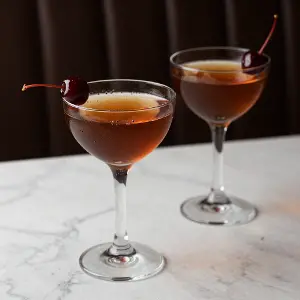
The Left Hand is a stirred whiskey cocktail that reimagines the classic Negroni template through an American lens, swapping gin for bourbon whiskey and adding chocolate bitters to bring a subtle mole-like complexity that lifts the whole drink into something distinctly its own. Served up in a chilled coupe or Nick & Nora glass with a cherry garnish, it is one of the most elegant bourbon cocktails in the modern canon — bittersweet, silky, and deeply satisfying.
Where the Boulevardier is the well-known bourbon Negroni, the Left Hand is its quieter, more complex sibling. The chocolate bitters make all the difference — they tie together the bourbon's vanilla and caramel with Campari's bitter orange and sweet vermouth's herbal richness in a way that no other modifier quite achieves.
Sam Ross created the Left Hand in 2007 at Milk & Honey, Sasha Petraske's legendary Lower East Side bar that trained a generation of the best bartenders in New York and fundamentally shaped the modern cocktail revival. Ross wanted to explore the Negroni's architecture with bourbon as the base spirit and was inspired by a new shipment of chocolate bitters from Bittermans, the artisan bitters company founded by Avery Glasser.
The drink's name is a nod to the Al Pacino character Lefty in the 1997 film Donnie Brasco — a small piece of bar culture trivia that gives the cocktail an additional layer of character. Michael McIlroy, Ross's colleague and future co-owner alongside him at Attaboy, created the complementary Right Hand — the same drink built with aged rum instead of bourbon — making the two cocktails a conceptual pair that bartenders frequently offer together.
Ross and McIlroy went on to open Attaboy in the former Milk & Honey space on Eldridge Street, where both cocktails remain part of the bar's living legacy. The Left Hand is now considered a modern classic and appears on menus at serious cocktail bars worldwide. VinePair documents its quiet but steady resurgence among bartenders who see it as one of the most refined bourbon cocktails of the 2000s.
The Left Hand is a stirred, spirit-forward cocktail with a rich, bittersweet profile. Bourbon provides the backbone — warm vanilla, toasted oak, and a touch of caramel — while Campari brings its unmistakable bitter orange complexity. Sweet vermouth adds herbaceous depth and a wine-like quality that smooths the edges between the two primary spirits.
The chocolate bitters are the secret weapon. They do not make the drink taste of chocolate in any literal sense; instead they act as a bridge, drawing out the cacao-adjacent notes in the bourbon and adding a mole-spice warmth — think cinnamon, ancho chile, dark chocolate — that makes the finish remarkably long and complex. The result is warming, sophisticated, and completely unlike any other bourbon cocktail you are likely to encounter.
Compared to the Boulevardier, the Left Hand is slightly sweeter and more textured, thanks to the interplay of the chocolate bitters with the other ingredients. Compared to the Old Fashioned, it is far more layered and bitter, appealing to drinkers who love complexity in their glass.
The Left Hand is traditionally built as two parts bourbon to one part each of Campari and sweet vermouth, finished with two dashes of chocolate bitters. Combine all ingredients in a mixing glass with ice and stir for approximately 30 seconds until well chilled and properly diluted. Strain into a chilled coupe or Nick & Nora glass and garnish with a brandied or luxardo cherry. The cherry is not an afterthought — its sweetness and maraschino quality complement the drink's bitter-chocolate profile beautifully.
The choice of bourbon matters. A higher-rye mashbill bourbon — think Four Roses Single Barrel or Bulleit — works exceptionally well because its spice adds another dimension to the chocolate bitters, while wheated bourbons like Maker's Mark produce a softer, more pillowy version. Both are delicious; the choice is a matter of preference.
McIlroy's companion cocktail uses aged rum in place of bourbon, producing a sweeter, more tropical-leaning drink with molasses depth. Served side by side with the Left Hand, the two cocktails demonstrate how a single base-spirit swap transforms a drink's entire personality while keeping the underlying architecture intact — a masterclass in cocktail variation thinking.
Replacing the bourbon with a smoky mezcal produces a dramatically different but equally compelling drink. The mezcal's smokiness amplifies the dark, mole-spice character of the chocolate bitters and creates a drink that feels almost savory. This variation pairs exceptionally well with grilled meats and aged cheeses.
While the Left Hand is canonically stirred and served up, some bartenders shake it over a large ice cube in a rocks glass for a slightly more diluted, accessible result. Purists will insist on the stirred version for its silkier texture and more concentrated flavor — and they are right — but the rocks version is a valid entry point for guests newer to spirit-forward cocktails.
The Left Hand sits in a distinguished neighborhood of stirred, spirit-forward cocktails that reward exploration. The Negroni is its gin-based ancestor and the most important reference point for understanding the Left Hand's structure. The Boulevardier is its closest relative — a bourbon Negroni that predates the Left Hand by decades and differs primarily in proportions and the absence of chocolate bitters. The Old Fashioned represents the stripped-down alternative for bourbon lovers who want the spirit to stand more fully alone.
For those drawn to the Left Hand's bitter-citrus character, the Paper Plane offers a shaken, equal-parts version of similar territory, and our guide to the best bourbon cocktails maps the full landscape of where American whiskey excels. Robb Report describes the Left Hand as one of the great under-appreciated American cocktails of the modern era — a sentiment that more and more drinkers are arriving at on their own.
The Left Hand is a cocktail for thoughtful occasions. Its stirred, spirit-forward nature makes it ideal as an after-dinner drink — the bitterness aids digestion while the warmth of the bourbon settles the evening. It is also an excellent choice before a rich meal, where its bitter complexity prepares the palate rather than dulling it.
At the table, the Left Hand pairs beautifully with dark chocolate, charcuterie, aged hard cheeses (particularly aged Gouda and Manchego), braised short ribs, and duck confit. Its mole-chocolate dimension makes it a natural partner for Mexican and Mexican-inspired cuisine. Whether you encounter it at a serious cocktail bar, make it alongside a Mint Julep for a bourbon-focused tasting flight, or serve it to a guest who thinks they do not like Campari, the Left Hand has a remarkable habit of converting the unconvinced.