Mix. Drink. Enjoy.
Discover amazing cocktail recipes and elevate your mixology game
Mix. Drink. Enjoy.
Discover amazing cocktail recipes and elevate your mixology game
Posted: July 14, 2026
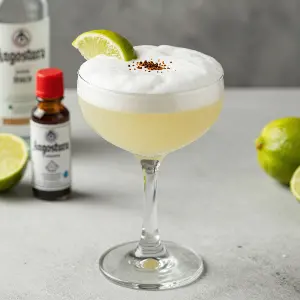
The Pisco Sour is South America's most famous cocktail export, a shaken sour built from pisco — an unaged grape brandy — fresh lime juice, simple syrup, and egg white, finished with a few drops of Angostura bitters on top. It's fruity, tart, creamy, and aromatic all at once, built on the same spirit-citrus-sweetener-egg white formula used in the site's Amaretto Sour and Boston Sour, though its pisco base and lime rather than lemon give it a character all its own.
Most accounts trace the Pisco Sour to Victor Vaughen Morris, an American expat who opened Morris' Bar in Lima, Peru, in 1916 and is credited with popularizing the drink there in the 1920s as a riff on the classic Whiskey Sour, swapping in pisco for whiskey and lime for lemon. The drink's true origins, though, sit at the center of one of South America's longest-running cultural disputes: Chile insists the cocktail actually traces back to 1872 in the port city of Iquique — then part of Peru, now part of Chile — where an English ship steward named Elliot Stubb is said to have first mixed it. That rivalry over both pisco and the Pisco Sour has simmered for over a century, tangled up with the two countries' broader history of border disputes dating back to the War of the Pacific in 1879. Peru's claim has gained significant institutional backing in recent years: the European Commission granted Peru exclusive rights to the "pisco" name as a protected geographical designation in 2013, and in 2024 UNESCO released historical records documenting pisco production and export in Peru dating back to the 16th and 17th centuries, a rivalry chronicled in detail by CNN's coverage of the pisco sour dispute. Today both countries still celebrate their own National Pisco Sour Day on different dates, a rare case of two nations each declaring their own official holiday for the same disputed cocktail.
Pisco itself is a clear, unaged grape brandy with a fragrant, slightly floral character that's distinct from both vodka's neutrality and whiskey's oak-driven warmth. Fresh lime juice adds sharp, clean acidity, while simple syrup rounds out the tartness into balance. Egg white, dry-shaken into the mixture before ice is added, creates a thick, silky foam that sits on top of the drink and softens every sip's texture, giving the Pisco Sour a luxurious mouthfeel that a standard sour lacks. A few dashes of Angostura bitters dropped onto that foam add a final aromatic note of clove and spice without being stirred in, so each sip carries a faint whiff of bitters riding on top of the citrus and pisco underneath.
Combine 2 oz pisco, 1 oz fresh lime juice, 0.75 oz simple syrup, and 1 egg white in a shaker without ice, and shake vigorously for a full 15-20 seconds to properly emulsify the egg white — this "dry shake" is essential for building real foam. Add ice and shake again until well chilled, then strain into a chilled coupe or sour glass. Finish with three or four drops of Angostura bitters on top of the foam, sometimes drawn through with a toothpick into a decorative pattern. Skipping the dry shake, or shortening it, is the most common mistake home bartenders make — without it, the egg white never fully aerates and the drink loses the frothy top that defines it, the same technique that makes the site's Whisky Sour work when made with egg white.
The Peruvian and Chilean versions of the Pisco Sour differ in a few key ways: the Chilean recipe typically skips both the egg white and the Angostura bitters, and uses pica lime, a smaller and more fragrant variety grown in Chile, rather than the limes typically used in Peru, a distinction detailed by Difford's Guide's breakdown of Peruvian versus Chilean pisco. Beyond the national rivalry, bartenders elsewhere have riffed on the formula using different fruit purées — passion fruit and mango are common substitutions for part of the lime juice, adding tropical sweetness without losing the core structure. For drinkers who enjoy the egg-white-foam technique but want a more familiar spirit base, the site's New York Sour and Vodka Sour both apply that same dry-shake method to more familiar spirits.
A chilled coupe or dedicated sour glass is the traditional serve, giving the foam room to sit attractively on top. Angostura bitters, drawn into a pattern on the foam, is the only garnish typically used. The Pisco Sour is a natural pairing for Peruvian and Latin American cuisine — ceviche especially — and works well as either a pre-dinner aperitivo or a celebratory drink for gatherings with a South American theme, sitting alongside the site's other Latin American classic, the Caipirinha.
The Pisco Sour has survived a century of both popularity and geopolitical squabbling to remain the single most internationally recognized cocktail to come out of South America. Its enduring appeal lies in genuine technical craft — the dry-shaken egg white foam is a real skill test that separates a good Pisco Sour from a mediocre one — combined with a spirit, pisco, that tastes like nothing else on a typical back bar. Whether claimed by Peru or Chile, the drink's cultural weight is significant enough that both nations continue to celebrate it as a point of national pride, ensuring the Pisco Sour's place among the world's essential sours alongside classics from the site's own sour cocktail collection.