Mix. Drink. Enjoy.
Discover amazing cocktail recipes and elevate your mixology game
Mix. Drink. Enjoy.
Discover amazing cocktail recipes and elevate your mixology game
Posted: November 2, 2023
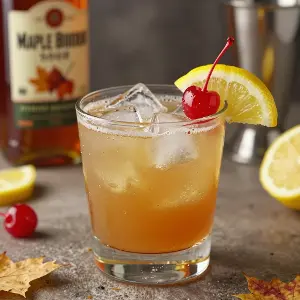
The Maple Bourbon Sour takes the basic architecture of the classic Whiskey Sour, spirit, citrus, sweetener, and swaps out plain simple syrup for real maple syrup, letting bourbon's own caramel and vanilla notes mingle with maple's toasty sweetness instead of getting buried under refined sugar. Built with bourbon, fresh lemon juice, maple syrup, and a few dashes of Angostura bitters, it's tangy, warmly sweet, and unmistakably autumnal, a cocktail that tastes like it was designed specifically for the stretch between the first cold morning and the last leaf falling. It's simple enough to make with three or four ingredients most home bars already stock, yet distinctive enough to feel like a genuine seasonal specialty rather than a basic sour with a syrup swap.
The Maple Bourbon Sour is a modern variation on one of the oldest cocktail families still in wide use. The Whiskey Sour's first written recipe appears in Jerry Thomas's 1862 book The Bartender's Guide: How to Mix Drinks, which called for whiskey, lemon juice, powdered sugar, and shaved ice, shaken and strained into a claret glass. According to a history of the drink published by The Manual, the format itself likely predates that written record by decades, tracing back to British sailors who mixed spirits with citrus, originally to stave off scurvy on long voyages, creating an early ancestor of the modern sour. Once the format was codified, bartenders spent the next century and a half riffing on it endlessly, swapping spirits, sweeteners, and garnishes while keeping the same spirit-citrus-sweet backbone intact.
Maple syrup entered the picture as bartenders looked for sweeteners that could do more than just balance a drink's acidity. Where simple syrup is neutral, maple syrup carries its own caramelized, slightly smoky depth that echoes the char and oak already present in bourbon from barrel aging, an effect similar to what makes a maple-sweetened Autumn Old Fashioned taste richer than a standard one. A community-contributed recipe archived on Difford's Guide keeps the formula lean, just bourbon, maple syrup, and fresh lemon juice, proof that the combination needs very little embellishment to work.
Expect a drink that's tangy up front and warm on the finish. Fresh lemon juice supplies bright, puckering acidity, the same backbone that defines any classic sour, while bourbon brings vanilla, caramel, and a touch of oaky spice. Maple syrup ties the two together, adding a rounder, toastier sweetness than simple syrup, with faint notes of toffee and brown butter that make the drink taste distinctly like autumn rather than generic "sweet." A few dashes of Angostura bitters add baking-spice depth, cinnamon and clove undertones that nudge the drink even further into cold-weather territory. Shaken hard with ice, it develops a light, frothy texture on top, especially if egg white is added, giving it a silkier mouthfeel similar to an Amaretto Sour or a Pisco Sour.
Some bartenders build in an herbal note by muddling fresh rosemary into the shaker or building a quick rosemary-infused maple syrup, a combination popularized in cocktail books that pair the herb's piney aroma with maple's sweetness for a more complex, savory-adjacent sour. Others add egg white for a foamier, silkier version closer in technique to a classic Whisky Sour, dry-shaking the egg white first before adding ice for a proper frothy cap. For drinkers who want extra visual drama, a float of dry red wine on top, borrowed straight from the New York Sour, turns the drink into a two-toned pour with a fruitier, slightly tannic finish layered over the maple and bourbon base. And for anyone who prefers their bourbon sweetened but unshaken, the same maple-and-bourbon pairing carries over cleanly into a stirred Old Fashioned format.
Shake bourbon, lemon juice, maple syrup, and bitters hard with ice, long enough to properly chill and slightly dilute the drink, since maple syrup is thicker than simple syrup and benefits from a vigorous shake to fully incorporate. Strain into a rocks glass over a single large ice cube for a cocktail-bar presentation, or serve up in a coupe if you want a cleaner, more formal pour. An expressed orange peel or a thin apple slice fanned across the rim makes a fitting autumnal garnish, and a light dusting of ground cinnamon on top adds aroma with every sip. If using egg white, dry shake first without ice, then add ice and shake again before straining, which produces the thick, stable foam that makes the drink look as good as it tastes.
The Maple Bourbon Sour's caramel warmth and citrus snap make it a natural match for fall entertaining: roasted squash dishes, glazed pork, aged cheddar, or a plate of pecan pie for dessert. It works equally well as a Thanksgiving welcome drink, a Friendsgiving cocktail-hour staple, or a solo nightcap on a cold evening, and its balance of sweet, sour, and spirit-forward notes makes it approachable for guests who might find a straight Old Fashioned or a stirred Manhattan too strong.
The Maple Bourbon Sour succeeds for the same reason the whiskey sour format has survived over 150 years: it's a simple, forgiving structure that rewards small changes with big flavor payoffs. Swapping maple syrup for plain sugar is a minor technical adjustment, but it transforms the drink's entire character, turning a bright, straightforward sour into something that tastes purpose-built for autumn. That mix of easy execution and genuine seasonal specificity is exactly why the Maple Bourbon Sour keeps earning a spot on fall cocktail menus and home bar rotations year after year.
Fill a cocktail shaker with ice. Add 2oz. of bourbon, 3/4 oz. feshly squeezed lemon juice and 1/2 oz. pure maple syrup to a shaker. Shake for about 10-15 seconds to chill and mix ingredients. Strain the mixture into a rocks glass filled with ice. Garnish with a lemon wheel and a maraschino cherry.