Mix. Drink. Enjoy.
Discover amazing cocktail recipes and elevate your mixology game
Mix. Drink. Enjoy.
Discover amazing cocktail recipes and elevate your mixology game
Posted: October 3, 2026
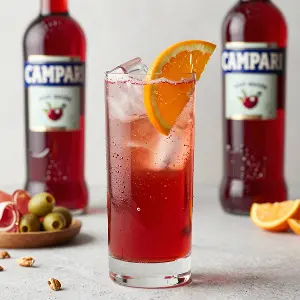
The Americano is a classic Italian aperitivo cocktail made with equal parts Campari and sweet vermouth, topped with soda water and served over ice with an orange slice. It's bittersweet, bubbly and refreshing, and at roughly half the strength of a Negroni, it's one of the best low-alcohol cocktails you can make.
Despite the name, the Americano is thoroughly Italian. It isn't related to the espresso-and-water coffee of the same name. In Italy it's a pre-dinner drink, meant to stimulate the appetite during the early-evening ritual of aperitivo.
The Americano's story starts in the 1860s at Gaspare Campari's bar in Milan, where he served his new bitter red liqueur mixed with vermouth. The drink was known as the Milano-Torino, because Campari came from Milan and vermouth from Turin. At some point, soda water was added to lengthen it, making it a lighter, more refreshing highball.
The most common story is that the drink became popular with American visitors to Italy, especially during Prohibition, when Americans abroad were eager to drink freely. Another theory links the name to "amaro," the Italian word for bitter. Either way, the name stuck. The drink also has a famous literary moment: it's the first cocktail James Bond orders in Ian Fleming's Casino Royale. The Americano's Wikipedia entry has more on its history.
The Americano is also the parent of the Negroni. According to the popular story, around 1919 in Florence, Count Camillo Negroni asked bartender Fosco Scarselli to strengthen his Americano by replacing the soda water with gin. The result became one of the most famous cocktails in the world.
The Americano is bittersweet and lively. Campari brings bold notes of bitter orange, rhubarb and herbs, while sweet vermouth adds rich, spiced, wine-like sweetness with hints of vanilla and dried fruit. The soda water lightens everything, adding a crisp sparkle and making the bitterness softer and more approachable than in a Negroni. The orange garnish adds fresh citrus aroma. It's dry enough to be refreshing and sweet enough to be easy to drink.
Swap the soda for gin and you have a Negroni. Swap the gin for bourbon and you have a Boulevardier. For a smoky twist, there's the Mezcal Negroni.
If you enjoy the Americano's light, bubbly bitterness, try the Aperol Spritz, which uses lighter, sweeter Aperol and prosecco, or the floral Hugo with elderflower and mint.
Some bars top the drink with prosecco instead of soda water for a more festive version. It's very similar to the famous "Negroni Sbagliato," which uses prosecco in place of gin.
Serve the Americano in a highball or rocks glass filled with plenty of ice. Large, clear cubes melt more slowly and keep the drink from getting watery. Our cocktail ice guide explains why this matters.
An orange slice or half-wheel is traditional. A lemon twist also works and gives a brighter, sharper aroma.
Campari is the classic choice and gives the Americano its signature ruby color and assertive bitterness. Its recipe is a closely guarded secret, but you can taste bitter orange peel, rhubarb, cherry and a complex mix of herbs. If you find Campari too bitter, other Italian red bitters are gentler and a little sweeter, though the drink will be less punchy.
Because vermouth makes up half the spirit in the drink, it has a big effect on flavor. A rich Italian rosso vermouth adds vanilla, cocoa and baking spice, while lighter styles keep the drink fresher and more citrusy. Remember that vermouth is wine-based. Once opened, store it in the refrigerator and use it within a month or so, because stale vermouth makes a flat, dull Americano.
Use cold, freshly opened soda water with plenty of fizz. A drink this simple shows off flat or warm soda, and the bubbles are what lift the bitter and sweet flavors. A little more soda gives a longer, lighter drink; a little less makes it richer and more bitter.
The Americano is made for aperitivo hour. Serve it with salty snacks like olives, potato chips, salted nuts, focaccia, prosciutto and cured salami, or with small bites of Parmigiano-Reggiano. Its low alcohol content makes it a great choice for long summer afternoons, brunch, garden parties and anyone who wants a sophisticated drink without much strength.
The Americano is a perfect introduction to Italian bitter drinks: it's less intense than a Negroni but just as elegant, it's quick to build in the glass, and it's light enough to enjoy more than one. It also has a great history as the drink that came before the Negroni. For a classic spec and more background, see the Americano recipe on Difford's Guide.