Mix. Drink. Enjoy.
Discover amazing cocktail recipes and elevate your mixology game
Mix. Drink. Enjoy.
Discover amazing cocktail recipes and elevate your mixology game
Posted: October 3, 2026
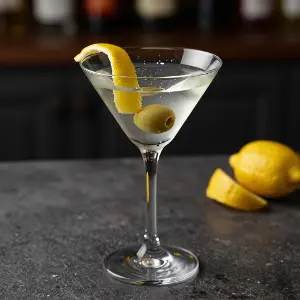
The Dry Martini is the most famous cocktail in the world: gin and dry vermouth, stirred with ice until very cold, strained into a chilled glass and finished with a lemon twist or an olive. A dash of orange bitters is an optional classic touch. It is simple, elegant and endlessly debated, and for many drinkers it is the definitive test of a bartender.
"Dry" refers to the amount of vermouth. A wetter martini uses more vermouth, while a very dry martini uses only a whisper. Most modern bars land somewhere between 3:1 and 5:1 gin to vermouth, which gives a crisp, aromatic drink where both ingredients can be tasted.
The martini's ancestor is the Martinez, a sweet nineteenth-century drink of Old Tom gin, sweet vermouth, maraschino and bitters. A drink called the "Martini" appears in Harry Johnson's Bartender's Manual of 1888, but it was still sweet by modern standards. Around the turn of the twentieth century, bartenders began switching to London dry gin and French dry vermouth, and the Dry Martini as we know it took shape. The name may come from the Martinez, from the Martini & Rossi vermouth brand, or from a bartender named Martini. No one knows for sure.
Through the twentieth century the drink got steadily drier. Ernest Hemingway joked about a 15:1 "Montgomery," and Winston Churchill was said to simply glance at the vermouth bottle while pouring his gin. The martini became a symbol of sophistication in films, novels and the mid-century business lunch. The martini's Wikipedia entry covers its long and contested history in more depth.
A great Dry Martini is bracingly cold, silky and aromatic. The gin brings juniper, citrus peel, coriander and other botanicals, while the vermouth adds subtle herbal, floral and wine-like notes that soften the gin's edges. The lemon twist adds a bright burst of citrus oil to the aroma, while an olive adds a faint savory note. It's a strong drink, essentially chilled spirits, so it's meant to be sipped slowly while it's still very cold.
There's no single "correct" ratio, and that's part of the fun. A 2:1 martini, close to early versions, is softer and more aromatic. A 5:1 is the modern standard: crisp and gin-forward. An "extra dry" martini might just rinse the glass with vermouth. If you find martinis too harsh, try more vermouth, not less. The 50/50 Martini uses equal parts and is a revelation for many drinkers. Always use fresh vermouth. It's a wine, so once opened it should be kept in the fridge and used within a few weeks.
Despite James Bond's famous order, the Dry Martini is classically stirred. Stirring chills and dilutes the drink while keeping it crystal clear with a heavy, velvety texture. Shaking makes it colder faster but cloudy and slightly thinner. Good ice makes a real difference. Our cocktail ice guide explains why, and our article on proper cocktail techniques walks through stirring step by step.
Adding olive brine makes a Dirty Martini, and garnishing with a cocktail onion makes a Gibson. Swapping the gin for vodka gives you a Vodka Martini, smoother and more neutral.
Ian Fleming's Vesper combines gin, vodka and Lillet and is shaken. It's a stronger, more aromatic cousin.
If you like the Dry Martini, try other stirred and shaken gin classics like the Hanky Panky, with sweet vermouth and Fernet-Branca, and the citrusy Pegu Club.
Use a well-chilled V-shaped martini glass, coupe or Nick & Nora glass. Smaller glasses are better, because a martini should be finished while it's still cold.
A lemon twist expressed over the surface brightens the gin's citrus notes and suits floral gins. An olive suits more savory, juniper-heavy gins. Both are correct, so choose what you enjoy.
A classic London dry gin with strong juniper gives the most traditional martini. Modern, citrus- or floral-forward gins make a softer, more aromatic drink. Higher-proof gins hold up better to dilution and give a richer texture. It's worth trying a few side by side to find your favorite.
The Dry Martini is the classic aperitif. It pairs well with oysters, smoked salmon, caviar, shrimp cocktail, salted almonds and crisp canapés. It's at home at dinner parties, steakhouses and quiet evenings at a hotel bar, anywhere a simple, elegant drink fits.
The Dry Martini has outlasted every cocktail trend because it is pure, adjustable and confident. With just two main ingredients, every choice matters: the gin, the vermouth, the ratio, the garnish and the temperature. That makes it endlessly personal. For a precise modern spec, see the Dry Martini recipe on Difford's Guide, and explore our best gin cocktails to make at home for your next drink.