Mix. Drink. Enjoy.
Discover amazing cocktail recipes and elevate your mixology game
Mix. Drink. Enjoy.
Discover amazing cocktail recipes and elevate your mixology game
Posted: August 1, 2026
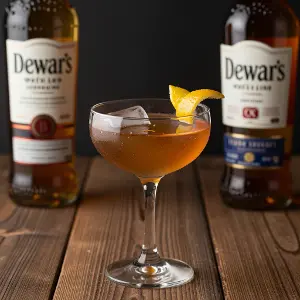
The Bobby Burns is a stirred, spirit-forward Scotch cocktail that ranks among the finest pre-Prohibition drinks to bear a proper name. Named in honor of Robert Burns — Scotland's national poet, whose words gave the world "Auld Lang Syne" and "To a Mouse" — the Bobby Burns is built on Scotch whisky, sweet vermouth, and a small measure of Bénédictine. The result is rich, herbal, slightly smoky (depending on the Scotch), and deeply sophisticated — a cocktail that rewards attention and improves with every sip.
Robert Burns (1759–1796) remains Scotland's most celebrated literary figure — a farmer's son from Ayrshire who wrote in Scots dialect about love, nature, mortality, and the dignity of ordinary people. Burns Night, celebrated annually on January 25th (the poet's birthday), is one of Scotland's most beloved traditions: a formal supper of haggis, neeps and tatties, accompanied by whisky toasts and readings of Burns' poetry. The Bobby Burns cocktail is a natural companion to Burns Night — a whisky drink that honors Scotland's most famous son with a combination that would have been recognizable (if slightly exotic) to the poet's contemporaries. The recipe appears in Harry Craddock's influential 1930 Savoy Cocktail Book, cementing its place in the canon of classic whisky cocktails. For more on Scotch whisky's role in cocktail culture, see MixDrinkEnjoy's Scotch page.
The Bobby Burns sits in the same territory as the Rob Roy (the Scotch equivalent of a Manhattan) but with an added layer of complexity from the Bénédictine. Scotch provides the foundation — smoke, dried fruit, honey, and grain depending on the style you choose; sweet vermouth adds dark fruit, herbs, and silky texture; Bénédictine contributes its famous herbal blend of 27 plants and spices, adding honey, saffron, and a sweet-herbal warmth that makes the cocktail feel almost medicinal in the best possible sense. The combination is rich and complex without being heavy — it is a sipping drink, meant to be consumed slowly with full attention. Those who enjoy the Boulevardier or the Old Fashioned will find the Bobby Burns a sophisticated next step — more herbal and complex, with the distinctive character of Scotch.
The choice of Scotch is the most important decision in making a Bobby Burns. The original recipe calls for blended Scotch, which integrates well with vermouth and Bénédictine — a blended Scotch like Dewar's White Label, Famous Grouse, or Monkey Shoulder produces an approachable, fruit-forward result with mild smoke. Single malts work beautifully when chosen thoughtfully: an Islay malt (Laphroaig, Ardbeg) will dominate the cocktail with heavy peat smoke, creating a much more assertive drink that the Bénédictine must fight to be heard through. Speyside malts (Glenfiddich, Glenlivet) produce a more elegant, floral result that lets the Bénédictine shine. Highland malts sit in between — heathery, slightly smoky, but not overwhelming. Experiment with what you have, but start with a medium blended Scotch if this is your first Bobby Burns. Difford's Guide's Bobby Burns page provides several variation ratios worth exploring for different Scotch styles.
Bénédictine D.O.M. is one of the world's oldest liqueurs, first produced by Alexandre Le Grand in Fécamp, Normandy in 1863 (though its monastic origins are partly legendary). It is made from 27 herbs and spices — including hyssop, angelica, juniper, myrrh, and saffron — macerated in Cognac and aged in oak barrels. In the Bobby Burns, Bénédictine plays a supporting role: a quarter to a half ounce is enough to add substantial complexity without overwhelming the Scotch. The liqueur also appears in the classic Vieux Carré (a New Orleans staple) and the Singapore Sling. Its combination with Scotch is particularly successful because both share a certain old-world complexity — Bénédictine's European herb blend and Scotch's grain-and-oak character create a dialogue between French monastic tradition and Scottish distillation. See the full Bénédictine ingredient page and related cocktails on MixDrinkEnjoy.
Stir all ingredients with ice for 25–30 seconds until well chilled and diluted, then strain into a chilled coupe or Nick and Nora glass. The Bobby Burns is always served up — no ice in the glass. Garnish with a lemon twist: express the oils over the surface of the drink, rub the peel around the rim, and either drop it in or discard it. Some recipes call for an orange twist instead, which softens the drink slightly and plays up the Bénédictine's floral notes. According to Liquor.com, a 2:1:0.25 ratio of Scotch to vermouth to Bénédictine is the modern standard, though the Savoy original was closer to equal parts Scotch and vermouth.
The Bobby Burns is the ideal cocktail for Burns Night (January 25th), but it deserves a place on the menu year-round. Its rich, warming character makes it well-suited to autumn and winter evenings; it pairs beautifully with aged cheese, smoked salmon, dark chocolate, and shortbread. For Burns Night specifically, serve it as the toast drink before the Address to the Haggis — it is sophisticated enough to honor the occasion and approachable enough for guests unfamiliar with Scotch. The Cinnamon Maple Whisky Sour makes an excellent partner cocktail for a whisky-themed evening, offering a contrasting lighter, sweeter style alongside the Bobby Burns' depth and richness.