Mix. Drink. Enjoy.
Discover amazing cocktail recipes and elevate your mixology game
Mix. Drink. Enjoy.
Discover amazing cocktail recipes and elevate your mixology game
Posted: October 19, 2025
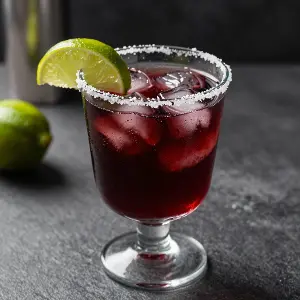
The Red Wine Margarita — sometimes called a Devil's Margarita — takes a standard tequila, triple sec, and lime margarita and tops it with a float of red wine, adding a layer of dark fruit flavor, tannic structure, and a striking two-tone look in the glass. It's a modern mashup of two familiar favorites rather than a historic classic, borrowing the same float technique used in whiskey-and-wine drinks like the site's New York Sour and applying it to tequila instead of whiskey.
The Margarita's own origin is famously contested — competing stories credit its invention to Mexican restaurateur Carlos "Danny" Herrera, who is said to have mixed one for showgirl Marjorie King in 1938, and to Dallas socialite Margarita "Margaret" Sames, who claimed to have created it at a house party in Acapulco in 1948. Whichever version is true, the drink's simple, adaptable formula — tequila, citrus, orange liqueur — has made it one of the most remixed cocktails of the 20th century, with variations ranging from Broadway star Chita Rivera's 1970s beer-and-limeade version to today's endless list of fruit and flavor riffs, a history traced in more depth by Wine Enthusiast's history of the Margarita. The red wine float is a much more recent addition, borrowed directly from the float technique used in the New York Sour, a whiskey sour topped with red wine that dates back to the 1870s and traces to Chicago bars before somehow picking up its New York name. Applying that same red wine float to a margarita rather than a whiskey sour turns out to work just as well — the wine's tannins and dark fruit character cut through the drink's citrus and sweetness in much the same way they balance the New York Sour's lemon and simple syrup.
The base of the drink tastes like a classic margarita — tequila's clean, slightly vegetal bite balanced by lime's tartness and triple sec's orange sweetness. The red wine float changes the experience with the very first sip: a fruity, medium-bodied red like cabernet franc, pinot noir, or grenache adds notes of dark berry and a touch of dry, tannic structure that contrasts sharply with the margarita's citrus brightness underneath. Because the wine sits on top rather than being fully mixed in, each sip can taste slightly different depending on how much wine versus margarita comes through the straw, giving the drink a layered, evolving flavor rather than one static profile from first sip to last.
Build a classic margarita first: shake 2 oz blanco tequila, 1 oz triple sec, and 1 oz fresh lime juice with ice, then strain into a salt-rimmed rocks glass filled with fresh ice. To float the wine, hold a bar spoon upside down just above the surface of the margarita and slowly pour 0.5-1 oz of red wine over the back of the spoon, letting it spread out and settle on top rather than sinking in. Because red wine is lighter than the mixed margarita below it, it should stay layered on top rather than blending in immediately, creating the drink's signature two-tone look. Blanco tequila is generally preferred over aged expressions here, since a more intense añejo or reposado can clash with the wine rather than complementing it — advice echoed by Chowhound's guide to the red wine margarita float.
Because the format is really just "margarita plus wine float," it's easy to adjust either half of the equation. Swapping triple sec for a splash of cranberry juice deepens the fruit character even further, playing up the red wine's berry notes rather than competing with orange. Muddling fresh strawberries or raspberries into the shaker before adding the tequila adds another layer of fruit and color, pushing the drink toward the same fruit-forward territory as the site's Italian Margarita, which layers in Amaretto for a nuttier twist on the classic formula, or the floral Hibiscus Margarita. For an even fruitier, lower-proof pour, some bartenders build the base with the site's Apple Cider Margarita recipe and top it with red wine instead of the usual float-free finish.
A salt-rimmed rocks glass is the standard serve, keeping the classic margarita presentation intact while showcasing the wine float's distinct top layer. A lime wheel is the typical garnish, sometimes joined by a few fresh berries that echo the wine's fruit character. It's a striking, conversation-starting drink well suited to dinner parties and gatherings where presentation matters as much as flavor, occupying similar territory to other float-topped drinks like the whiskey-based New York Sour or a classic Whisky Sour for drinkers who want the citrus-forward base without the wine on top. Drinkers exploring the wider tequila category might also enjoy the site's broader tequila cocktail guide for other margarita and paloma riffs.
The Red Wine Margarita succeeds because it takes two extremely familiar drinks — the classic Margarita and a glass of red wine — and combines them into something that feels novel without requiring any unfamiliar ingredients or techniques. Its dramatic visual presentation, easy to recreate with nothing more than a bar spoon and a bottle of red, has made it a natural fit for social media and home entertaining alike. As bartenders keep looking for new ways to reinvent the world's most popular cocktail, borrowing tricks like the wine float from other classic drinks has become one of the most reliable paths forward, and the Red Wine Margarita stands as one of the best examples of that cross-pollination between two very different corners of the drinks world — right alongside the classic Margarita it borrows its base from.