Mix. Drink. Enjoy.
Discover amazing cocktail recipes and elevate your mixology game
Mix. Drink. Enjoy.
Discover amazing cocktail recipes and elevate your mixology game
Posted: March 4, 2024
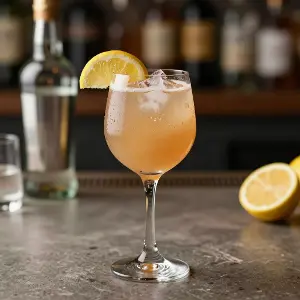
The Irish Slammer is a bomb shot built entirely from Irish ingredients: a shot glass holding equal parts Irish whiskey and Irish cream liqueur, dropped whole into a partially finished pint of Guinness stout and drunk immediately while the whole thing foams up. It's a loud, fast, communal drink rather than a sipping cocktail — the kind of thing ordered in rounds at a pub rather than nursed alone — and it belongs to the same "drop shot" family as the Irish Frog Shooter and other layered party shots on the site's Saint Patrick's Day collection. As the whiskey and cream hit the stout, the mixture curdles slightly and fizzes, which is exactly the point: it has to be drunk in one go, before the texture turns from creamy to clumpy.
The Irish Slammer is better known under a different, more controversial name: the Irish Car Bomb. According to Wikipedia's history of the drink, it was invented in 1979 by bartender Charles Burke Cronin Oat at Wilson's Saloon in Norwich, Connecticut. Oat had already been experimenting with Irish-themed shots — in 1977 he combined Baileys Irish Cream and Jameson Irish Whiskey into a shot he called "the IRA" — and in 1979 he took the next step, dropping that same whiskey-and-cream shot into a half-finished pint of Guinness. The resulting drink became known as the Irish Car Bomb, a name that directly references the car bombings carried out during the Troubles, the decades-long conflict in Northern Ireland that killed thousands of people. Because of that connection, many bars and bartenders — particularly in Ireland, the UK, and Irish-American communities — have long declined to use the original name, and the drink is now served under alternatives such as Irish Slammer, Dublin Drop, or Belfast Bomber. The recipe itself hasn't changed; only the name has been retired in most professional settings, which is why you'll find it listed here, and on most modern menus, simply as the Irish Slammer.
On its own, the whiskey-and-cream shot is smooth and sweet, closer in flavor to the Irish Flag Shot than to a straight pour of whiskey. Irish whiskey tends to be lighter and softer than bourbon or rye, and Irish cream liqueur adds vanilla, chocolate, and caramel notes on top of that, so the shot itself goes down easily. Dropped into Guinness, the flavor shifts again: the stout's roasted, slightly bitter, coffee-like character cuts through the sweetness of the cream and whiskey, while the shot's carbonation reaction with the beer creates a fast, foamy head that has to be drunk through rather than sipped around. The overall effect is sweet and creamy up front, bitter and roasty on the finish, with a texture that's intentionally short-lived — most bartenders warn that letting it sit for more than a minute causes the cream to curdle into unappetizing clumps.
The build is simple but the timing matters. Pour a pint of Guinness and let it settle until it's about three-quarters full. In a separate shot glass, combine 0.5 oz Irish cream liqueur and 0.5 oz Irish whiskey — Jameson and Baileys are the standard pairing, though any Irish whiskey and Irish cream will work. Drop the full shot glass into the pint of Guinness and drink the entire thing immediately, before the cream has time to curdle in the beer. It's typically drunk in one long go rather than in sips, both for the ritual of it and because the texture degrades quickly once the shot glass hits the stout. Craft Beering's breakdown of the build recommends floating the whiskey on top of the cream in the shot glass rather than stirring the two together, which keeps the layers distinct until the moment the shot hits the beer.
Most variations on the Irish Slammer swap out one of the three components while keeping the drop-shot format intact. Some bars use a different Irish cream brand or a homemade cream liqueur for a richer, less sweet result, while others substitute a different stout — an oatmeal stout or a nitro stout from a craft brewery — for Guinness, changing the roastiness and mouthfeel of the base. A small number of variations swap the whiskey for a different spirit, such as Irish poitín for a sharper, more aggressive version, though this moves further from the original recipe. For drinkers who want the same Irish-whiskey-and-cream flavor without the beer-drop theatrics, the Irish Whiskey Ginger and Irish Mule offer a similar Irish-whiskey base in a slower, more sippable format.
The Irish Slammer is a party and pub drink through and through, most commonly seen on Saint Patrick's Day and at bars with a strong Irish-pub identity. It requires no special glassware beyond a standard pint glass and a shot glass, and no garnish — the presentation is the drop and the foam, not anything added afterward. It's almost always ordered and drunk in a group, since the appeal is partly performative: watching the shot hit the stout and everyone drinking together before the texture turns. It sits alongside other bomb-style party shots like the Jager Bomb in bar culture, though its ingredients and Irish theming set it apart from that energy-drink-based category.
Despite — or in some cases because of — the baggage around its original name, the drink underneath has kept a loyal following for over four decades. It's inexpensive to make, requires no bartending skill beyond pouring and dropping, and delivers a genuinely distinctive flavor experience that a straight shot or a slow-sipped cocktail like an Old Fashioned can't replicate. Rebranding it as the Irish Slammer has let bars keep serving the drink itself while sidestepping the darker implications of its original name, and that renaming has arguably helped it survive into an era with much lower tolerance for edgy 1970s bar-drink names. Ordered under any of its names, it remains one of the most recognizable novelty shots in Irish-American bar culture, particularly every March.