Mix. Drink. Enjoy.
Discover amazing cocktail recipes and elevate your mixology game
Mix. Drink. Enjoy.
Discover amazing cocktail recipes and elevate your mixology game
Posted: March 12, 2024
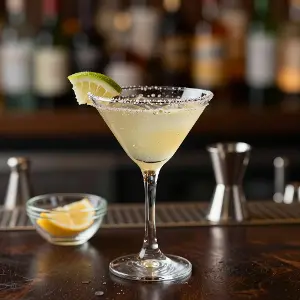
Irish Whiskey Ginger is about as simple as cocktails get: Irish whiskey poured over ice and topped with ginger ale. There's no shaking, no syrup, and no complicated ratio to memorize — just two ingredients built directly in the glass. That simplicity is exactly the point. It's a highball meant for easy, unhurried drinking, the kind of order that works equally well at a crowded pub or a quiet night at home, and it sits comfortably alongside other low-fuss whiskey drinks like the Old Fashioned and the ginger-beer-based Irish Mule on the more approachable end of the whiskey-cocktail spectrum.
The pairing of whiskey and ginger ale is older than most drinkers assume. One of the earliest documented references to the combination appears in an 1895 American cocktail book, The Mixicologist by C.F. Lawlor, putting whiskey-and-ginger drinks on record well before the classic highball era of the early 20th century. The broader highball format — a spirit lengthened with a carbonated mixer over ice — took off in the late 19th century, originally built around Scotch and soda before ginger ale became a popular alternative. Ginger ale itself has a distinctly Irish connection: Wikipedia's history of ginger ale credits the golden style most associated with whiskey highballs to Irish doctor Thomas Joseph Cantrell, who is widely cited as developing it in Belfast, Northern Ireland, around 1851. That regional pairing of Irish whiskey with an Irish-invented mixer is likely part of why the drink is sometimes called an "Irish Buck," a name that also nods to the Buck family of cocktails — spirit, citrus, and ginger — that includes drinks like the Moscow Mule.
Because both drinks pair Irish whiskey with a ginger-flavored mixer, the Irish Whiskey Ginger is frequently mistaken for, or confused with, the Irish Mule. The key difference is the mixer and the added citrus: the Irish Mule uses spicier, less sweet ginger beer along with fresh lime juice, giving it more heat and tartness, while the Irish Whiskey Ginger relies on the softer sweetness of ginger ale alone, with no citrus juice added. The result is a gentler, more sippable drink than its mule cousin, closer in spirit to a classic Scotch and soda than to a punchy, lime-forward mule.
Irish whiskey itself is known for being lighter and smoother than bourbon or rye, typically triple-distilled and less heavily oaked, which makes it a natural match for a mixer rather than a base for sipping neat. Ginger ale brings gentle sweetness and a mild, warming spice that softens the whiskey's alcohol bite without masking its flavor. The overall effect is easy-drinking and only lightly spiced — noticeably gentler than a ginger beer cocktail — with the whiskey's honeyed, slightly grassy notes still coming through underneath the ginger ale's carbonation and sweetness. It's a drink built for refreshment rather than intensity, which is part of why it works so well as a session sipper.
Fill a highball glass with ice, add 2 oz of Irish whiskey, and top with 4 oz of chilled ginger ale. Stir gently just a few times to combine without knocking out the carbonation, and finish with a lime wedge or wheel for a touch of citrus aroma. Using large, clear ice cubes helps the drink stay cold without diluting too quickly, and chilling the ginger ale ahead of time keeps the fizz lively rather than flat, a technique The Whiskey Wash's guide to the whisky highball also recommends for keeping carbonation crisp. Because the recipe is so forgiving, the ratio can be adjusted easily — more ginger ale for a lighter, longer drink, or a heavier whiskey pour for something closer to a whiskey-and-splash.
The basic two-ingredient formula invites plenty of small tweaks. A squeeze of fresh lime juice pushes the drink closer to an Irish Buck, adding brightness that balances the ginger ale's sweetness. Swapping ginger ale for spicier ginger beer turns it into something closer to the Irish Mule, with more heat and a drier finish. Some bartenders add a dash of Angostura bitters for extra depth, echoing the aromatic complexity found in a Manhattan, while others build the drink with soda water instead of ginger ale for a crisper, less sweet whiskey highball. Around Saint Patrick's Day, some bars add a few drops of green food coloring for a festive presentation, in keeping with the playful spirit of the site's broader Saint Patrick's Day collection.
A tall highball or Collins glass is the standard choice, filled generously with ice to keep the drink cold through a long, slow sip. A lime wedge is the most common garnish, though some bartenders skip garnish altogether given the drink's no-fuss reputation. It's a versatile order — equally at home as a low-key happy-hour drink, a lighter alternative to gin and tonic for whiskey drinkers, or a session sipper meant to be nursed over a long evening rather than downed quickly, much like a Gin and Tonic occupies for gin drinkers. It shares that same easy, all-occasion versatility with the site's other pub-friendly Irish drinks, including the Irish Slammer on nights that call for something more festive.
Part of what keeps the Irish Whiskey Ginger in steady rotation is how little it demands of the drinker or the bartender. It requires no specialty ingredients, no technique beyond pouring and stirring, and it scales up easily for groups. It's also a forgiving entry point into Irish whiskey for drinkers who find the spirit too intense on its own, softening the alcohol heat without drowning out its flavor the way a heavily sweetened mixed drink might. That combination of simplicity, familiarity, and genuine flavor balance — not unlike the appeal covered in our guide to bourbon cocktails for whiskey lovers — is exactly why the whiskey-and-ginger-ale combination has stayed on bar menus for well over a century.