Mix. Drink. Enjoy.
Discover amazing cocktail recipes and elevate your mixology game
Mix. Drink. Enjoy.
Discover amazing cocktail recipes and elevate your mixology game
Posted: August 1, 2026
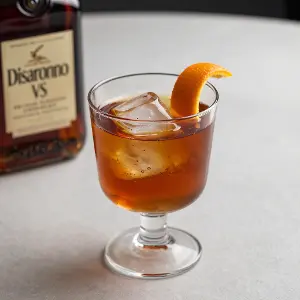
The French Connection is one of the most elegant two-ingredient cocktails in the bartender's repertoire — a simple but supremely satisfying combination of Amaretto Di Saronno and cognac that has been enjoyed since the 1970s. Its name evokes the glamour of French cinema and the sophisticated café culture of Paris, and its character delivers on that promise: warm, rich, gently sweet, and deeply satisfying. It is the cocktail equivalent of a fine digestif — something to be lingered over at the end of a good meal, glass in hand, with nowhere pressing to be.
The French Connection takes its name from the 1971 Academy Award-winning film starring Gene Hackman as Detective "Popeye" Doyle — one of the most celebrated crime films of the 1970s and the movie responsible for the phrase "French Connection" entering the popular consciousness. Whether the cocktail was created in direct homage to the film or simply adopted its name for the cultural cachet it carried is not definitively established, but the drink appears in cocktail guides from the late 1970s and became a staple of bar menus through the 1980s. Its formula — French cognac plus Italian amaretto — creates a genuinely international pairing that justifies the name in its own right: two of Europe's great after-dinner liqueur traditions meeting in a single glass. For more on the amaretto tradition that makes this cocktail possible, see MixDrinkEnjoy's Amaretto Di Saronno page. Compare the French Connection's two-ingredient simplicity with its close relative the Godfather, which uses Scotch whisky in place of cognac, and the Godmother, which uses vodka.
The French Connection is a spirit-forward, after-dinner drink with a silky, warming character. Cognac contributes dried fruit, vanilla, toasted oak, and a gentle warmth that unfolds over multiple sips. Amaretto Di Saronno adds its distinctive bittersweet almond flavor — part sweet marzipan, part bitter cherry pit, part vanilla — along with a viscous, syrupy sweetness that softens the cognac's edges without overwhelming it. The combination is harmonious in a way that two-ingredient cocktails rarely achieve: neither ingredient overpowers the other, and together they produce something greater than the sum of their parts. The finish is long, warm, and pleasantly nutty, with the cognac's fruit-and-oak character lingering alongside the amaretto's almond sweetness. Those who enjoy the Godfather's profile will find the French Connection slightly softer and fruitier, with cognac's grape-based character providing a different warmth from Scotch's grain-and-smoke.
Cognac is a brandy produced exclusively in the Cognac region of southwestern France, made from white wine grapes (primarily Ugni Blanc) distilled twice in copper pot stills and aged in French oak barrels for a minimum of two years. The result is a spirit of extraordinary complexity — layers of dried fruit, vanilla, caramel, spice, and floral notes that develop over years of barrel aging. The most common age designations are VS (aged at least two years), VSOP (aged at least four years), and XO (aged at least ten years). For the French Connection, a VS or VSOP cognac is entirely appropriate — there is no need to use an expensive XO, whose subtle complexities would be partially masked by the amaretto. Hennessy VS, Martell VSOP, or Rémy Martin VSOP are all excellent choices. The cognac's fruit-and-oak backbone is the essential counterpoint to amaretto's sweetness. According to the Bureau National Interprofessionnel du Cognac, only brandy produced in the Cognac appellation can legally be called cognac — a distinction that matters for quality assurance in a cocktail where the spirit is so prominent.
Amaretto Di Saronno (now marketed simply as Disaronno Originale) is the world's most famous amaretto liqueur, produced in Saronno, Lombardy, since the sixteenth century. According to legend, it was created in 1525 as a gift from a young artist's model to the painter Bernardino Luini, a student of Leonardo da Vinci, who was painting a fresco at the Sanctuary of Santa Maria delle Grazie. Whether or not this origin story is literally true, the liqueur has been produced in Saronno for five centuries and remains the benchmark against which all other amarettos are measured. Its distinctive flavor comes from a proprietary blend of seventeen herbs and fruits macerated in apricot kernel oil — not almonds, despite the almond-forward flavor. The result is a liqueur of genuine complexity: bittersweet, floral, and warming, with a character that pairs beautifully with brown spirits like cognac and bourbon. For all cocktails that use this remarkable ingredient, explore the full Amaretto Di Saronno cocktail collection on MixDrinkEnjoy. According to Disaronno's own website, the liqueur's recipe has remained unchanged for over five centuries.
The French Connection is a built drink — constructed directly in the glass without shaking or stirring in a mixing glass. Add ice to a short rocks glass or Old Fashioned glass, pour cognac, then amaretto, and stir gently once to combine. The ratio most commonly used is 1.5 oz cognac to 0.75 oz amaretto, though some recipes use equal parts. Adjusting the ratio toward more cognac produces a drier, more spirit-forward result; more amaretto makes it sweeter and more dessert-like. The cocktail is typically served without a garnish, though an orange twist — expressed over the glass to release its oils, then dropped in — adds a bright citrus note that plays beautifully against the almond-and-fruit combination. Some bartenders serve it neat (no ice) in a warmed snifter, in the style of cognac service, which intensifies the aromatics and the warming character. See MixDrinkEnjoy's cocktail techniques guide for stirring and building best practices.
The French Connection's two-ingredient framework is a versatile template. The most famous variants are the "Godfather Family": the Godfather (Scotch + amaretto), the Godmother (vodka + amaretto), and occasionally the "Godchild" (cream + amaretto). A "French Kiss" variant adds a small measure of raspberry liqueur to the French Connection, adding a berry note that plays against the almond and fruit. A warm version — heated cognac and amaretto in a mug — is an excellent cold-weather drink, similar in spirit to a hot toddy but richer and more indulgent. For more amaretto cocktails to explore, the Amaretto Sour offers the same starring ingredient in an entirely different, bright and citrus-forward context, and the Orgasm Shot shows how amaretto performs in a rich, creamy short drink.
The French Connection is quintessentially an after-dinner drink — its sweetness, warmth, and almond-fruit richness make it a perfect conclusion to a meal. It pairs magnificently with dark chocolate (particularly anything with almond, orange, or coffee notes), tiramisu, crème brûlée, marzipan desserts, biscotti, and aged cheeses. As a cocktail for sophisticated entertaining, it is unmatched: it requires no special equipment, no unusual ingredients, and can be made in under a minute — yet it arrives in the glass looking and tasting like the product of genuine expertise. The French Connection suits winter evenings especially well, when its warming character is most appreciated, but it is equally at home in any season as a post-dinner nightcap. For ideas on building a complete amaretto cocktail experience, explore the full amaretto cocktail collection on MixDrinkEnjoy.