Mix. Drink. Enjoy.
Discover amazing cocktail recipes and elevate your mixology game
Mix. Drink. Enjoy.
Discover amazing cocktail recipes and elevate your mixology game
Posted: August 1, 2026
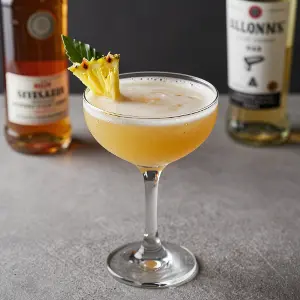
The Algonquin Cocktail is a pre-Prohibition classic with genuine literary pedigree — named for the Algonquin Hotel on West 44th Street in Manhattan, where the celebrated Round Table of writers, critics, and wits gathered through the 1920s. It pairs rye whiskey with dry vermouth and pineapple juice — a combination that sounds unlikely until you taste it, at which point the tropical brightness of pineapple and the dry herbaceous quality of the vermouth reveal themselves as natural partners for rye's peppery spice. The result is tart, slightly sweet, refreshing, and distinctly original.
The Algonquin Hotel became famous in the early 1920s as the lunchtime gathering place of Dorothy Parker, Robert Benchley, Alexander Woollcott, Edna Ferber, and the other members of what became known as the Algonquin Round Table — a group of writers whose wit and conversation made the hotel's Rose Room one of the most famous lunch spots in American literary history. The hotel's bar naturally served as an extension of this creative atmosphere, and the Algonquin Cocktail emerged from this context as the house drink that connected the building's sophisticated clientele with the cocktail culture of the Prohibition era. It appears in cocktail guides from the late 1930s through the post-war period, and the hotel itself still serves a version of it today. For more on how great American cocktail culture was built in exactly this kind of setting, see MixDrinkEnjoy's whiskey cocktail guide.
The Algonquin's genius is in its unlikely balance. Rye whiskey contributes spice, grain, and depth; dry vermouth adds bone-dry herbal complexity without sweetness; pineapple juice provides tropical brightness and a gentle sweetness that ties the other two together. The combination is lighter and more refreshing than most rye cocktails, with a bright, citrus-adjacent quality from the pineapple that makes it feel almost summery. It is best served well-chilled in a coupe — the cold amplifies the vermouth's crispness and the pineapple's clarity. Those who enjoy the Yuzu Sour's bright, unexpected citrus-spirit pairing will find the Algonquin similarly surprising and satisfying. The pineapple juice works here because it's not trying to be a tropical tiki drink — it is playing a supporting role, providing a sweetness and acidity that conventional citrus would deliver less elegantly with rye.
Dry vermouth varies considerably between brands, and the choice matters in a three-ingredient cocktail. Noilly Prat is the classic choice — bone-dry and complex, with an oxidative, almost nutty quality that pairs well with rye's assertiveness. Dolin Dry is lighter and more floral, producing a fresher-tasting Algonquin. Avoid cheap dry vermouth; once opened, keep vermouth refrigerated and use within three to four weeks. Fresh, high-quality dry vermouth is the difference between an Algonquin that tastes like a sophisticated classic and one that tastes flat and bitter. Pair this with knowledge from MixDrinkEnjoy's dry vermouth page to explore other vermouth cocktails.
Some versions of the Algonquin use bourbon in place of rye, which softens the drink considerably and pushes the pineapple forward. Others add a dash of Angostura bitters for aromatic depth. A version with fresh pineapple juice (rather than bottled) brightens the drink noticeably and is well worth the extra effort if fresh pineapple is available. The Algonquin's format — spirit, dry vermouth, fruit juice — is a useful template for invention: try replacing the pineapple with white grapefruit juice for a drier, more austere drink, or with fresh mango for something richer and more tropical.
Shake all ingredients vigorously with ice — the pineapple juice needs to be fully integrated and the drink should be well-chilled. Strain into a chilled coupe or cocktail glass. The drink has a pale golden color and a fine foam from the pineapple juice that makes it look quietly elegant. No garnish is strictly necessary; a small pineapple leaf or a lemon twist adds a finishing touch without competing with the drink's delicate balance. According to The Spruce Eats, equal parts is the classic ratio — 1 oz each of rye, dry vermouth, and pineapple juice — though many bartenders increase the rye to 1.5 oz for a more spirit-forward result. Liquor.com's Algonquin page provides historical context and several ratio variations worth exploring.
The Algonquin's combination of rye spice, dry herbaceous vermouth, and tropical sweetness makes it an excellent aperitif. It pairs well with oysters, shrimp cocktail, light crudités, goat cheese, and any dish with a bright, acidic quality. As a cocktail for literary-themed entertaining or book club evenings, it carries its own conversation — very few guests will have encountered it, and its history at one of New York's most storied hotels gives it a guaranteed story to tell. Explore MixDrinkEnjoy's rye whiskey page for more classic rye cocktails, and the Whisky Sour for another tart, citrus-forward whiskey cocktail to round out a tasting evening.