Mix. Drink. Enjoy.
Discover amazing cocktail recipes and elevate your mixology game
Mix. Drink. Enjoy.
Discover amazing cocktail recipes and elevate your mixology game
Posted: October 11, 2026
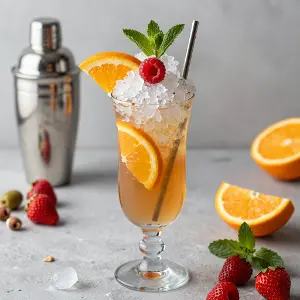
The Sherry Cobbler is one of the oldest and most influential cocktails in American history. It is a simple combination of amontillado sherry, a little sugar and fresh orange, shaken hard and poured over a mound of crushed ice, then piled high with seasonal fruit and served with a straw. The result is light, cold, gently sweet and deeply refreshing, with nutty, savory notes from the sherry. It is low in alcohol, endlessly drinkable and, after a long period of obscurity, firmly back in fashion in craft cocktail bars.
If you enjoy low-proof aperitifs such as the Bamboo or long, fruity drinks like Sangria, the Sherry Cobbler is a must-try.
The Cobbler appeared in America around the 1830s and quickly became a sensation. By the 1840s, the Sherry Cobbler was arguably the most popular mixed drink in the country. Charles Dickens helped spread its fame abroad: in his 1844 novel Martin Chuzzlewit, a character is served a Sherry Cobbler and marvels at the strange and wonderful drink. Bartending pioneer Jerry Thomas included it in his landmark 1862 bar guide, calling it the most popular beverage in the country with ladies as well as gentlemen.
The drink was a technological marvel of its time. It depended on cheap, plentiful ice, made possible by the booming 19th-century ice trade that harvested frozen lakes and shipped blocks around the world. It also helped popularize the drinking straw, since sipping through a straw was the best way to enjoy a glass packed with crushed ice and fruit. Even the three-piece cobbler shaker, still used in bars today, takes its name from this drink. You can learn more on Wikipedia's Sherry Cobbler page and about the wider category on Wikipedia's Cobbler page.
Prohibition and changing tastes eventually pushed the Cobbler into the history books, but the modern cocktail revival rediscovered it. Today it is celebrated as a light, food-friendly drink and a showcase for the incredible variety of Spanish sherry.
Sherry is a fortified wine from the Jerez region of southern Spain, ranging from bone-dry and saline to lusciously sweet. Amontillado, the most common choice for a Cobbler, is aged first under a layer of yeast called flor and then oxidatively, giving it a beautiful amber color and flavors of hazelnut, dried orange peel, caramel and sea salt. Fino sherry makes a lighter, crisper Cobbler, while oloroso creates a richer, nuttier one. For an introduction to the styles, see Wikipedia's sherry page.
The Sherry Cobbler is bright, nutty and fruity all at once. Shaking the sherry with a muddled orange wheel releases juice and aromatic oils, so the first sip is fresh and citrusy. The amontillado brings toasted nut, dried fruit and a savory, almost salty edge, while a touch of simple syrup rounds everything out. Crushed ice keeps the drink extremely cold and slightly dilutes it as you sip, making it lighter and more refreshing over time. At around 15 to 20 percent alcohol for the sherry itself, the finished drink is gentle enough to enjoy over a long afternoon.
Place one orange wheel in a cocktail shaker and muddle it lightly. Add three ounces of amontillado sherry and half an ounce of simple syrup, then fill the shaker with ice and shake hard for about 10 seconds. Pour the contents, or strain them, into a tall glass packed with crushed ice, then top with more crushed ice to form a mound. Garnish generously with an orange half-wheel, fresh berries and a sprig of mint, and serve with a straw.
Crushed ice is essential. If you do not have an ice crusher, wrap ice cubes in a clean kitchen towel and smash them with a rolling pin. The garnish is equally important: the Cobbler was meant to look abundant, with fruit spilling out of the glass.
The Cobbler is really a family of drinks, and almost any wine or spirit can take center stage. Whiskey Cobblers, Brandy Cobblers and Champagne Cobblers were all popular in the 19th century. Modern bartenders swap amontillado for fino, manzanilla, oloroso or even sweet Pedro Ximénez, and experiment with different fruits such as pineapple, raspberries or blackberries. A splash of orange liqueur or a few dashes of bitters can add complexity. If you enjoy the crushed-ice style, try the Mint Julep, another 19th-century American icon served over a mound of ice.
Serve the Sherry Cobbler in a tall Collins glass, a goblet or a julep cup, filled to the brim with crushed ice. Pile the fruit on top and add a straw, preferably a reusable metal or paper one, since the drink is meant to be sipped from the bottom of the glass.
Thanks to its low alcohol and savory sherry character, the Sherry Cobbler is wonderfully food-friendly. Serve it with Spanish tapas: salted almonds, olives, Manchego cheese, jamón, croquetas and grilled shrimp. It is perfect for brunch, garden parties and warm afternoons when you want something festive that will not knock you over. For more timeless recipes, explore our classic cocktails and our lighter low-alcohol cocktails.
The Sherry Cobbler offers a rare combination of history, simplicity and refreshment. It shaped the way we drink cocktails, introducing crushed ice and straws to the mainstream, and it remains just as delicious today as it was in the 1840s. It is easy to make, low in alcohol and beautiful to look at. For a modern bartender's take, see Punch's Sherry Cobbler recipe.