Mix. Drink. Enjoy.
Discover amazing cocktail recipes and elevate your mixology game
Mix. Drink. Enjoy.
Discover amazing cocktail recipes and elevate your mixology game
Posted: January 9, 2024
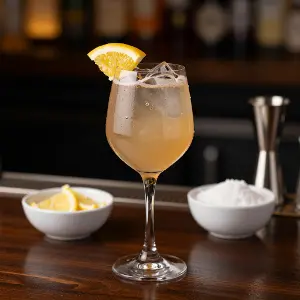
The Dirty Blonde is a bright, citrus-forward vodka cocktail built on the classic pairing of peach schnapps and grapefruit juice. It sits comfortably in the same family as beach-bar staples like the Fuzzy Navel and the Woo Woo, but it swings the flavor profile away from cloying sweetness and toward something tarter and more refreshing. Vodka provides a clean, neutral backbone, peach schnapps adds a soft stone-fruit sweetness, and fresh grapefruit juice cuts through both with a bracing, slightly bitter tang. The result is a drink that reads as sunny and easygoing without tipping into sugar-bomb territory, which is exactly why it has found a home on brunch menus and patio bars alike.
Like many peach schnapps cocktails, the Dirty Blonde doesn't trace back to a single bartender or a founding date the way older classics do. Peach schnapps itself didn't become a fixture of American bars until the late 1970s and early 1980s, when liqueurs like DeKuyper's Peachtree Schnapps hit the market and quickly became the backbone of a wave of fruity, low-effort mixed drinks. That era produced the Fuzzy Navel (vodka or schnapps with orange juice), the Woo Woo (vodka, peach schnapps, and cranberry juice, reportedly popularized at the First Edition Bar in Bayside, Queens), and eventually Sex on the Beach, which combined both juices with vodka and schnapps into a Florida spring-break favorite. Difford's Guide traces this whole category back to the liqueur's arrival in American bars, noting how quickly it became a shortcut for bartenders looking to add fruit-forward sweetness without reaching for a blender. The Dirty Blonde reads as a natural extension of that lineage, one that trades the cranberry or orange juice used in its predecessors for tart grapefruit, giving the schnapps' sweetness something sharper to play against. You can read more about this whole family of drinks in our roundup of the best peach schnapps cocktails, which covers how the liqueur went from a novelty import to a staple of the home bar cart.
The grapefruit half of the equation has its own well-documented history. The pairing of vodka (or gin) with grapefruit juice goes back at least to Harry Craddock's 1930 Savoy Cocktail Book, which included an early version of what would later be called the Greyhound. According to Wikipedia's history of the Greyhound, the name itself wasn't attached to the drink in print until a 1945 issue of Harper's Magazine, which linked it to the Greyhound bus line's Post House restaurants. By the postwar years, vodka had overtaken gin as the base of choice, setting the template that drinks like the Dirty Blonde still follow today: a neutral spirit, fresh grapefruit juice, and whatever flavor accent the bartender wants to layer in.
The Dirty Blonde is best described as sweet-tart with a soft peachy undertone and a citrus bite that lingers on the finish. Vodka keeps the palate clean, so neither the schnapps nor the grapefruit juice has to fight through a heavy spirit-forward flavor the way they might in a whiskey or rum cocktail. The peach schnapps rounds out the drink's edges and gives it a candy-like fragrance on the nose, while the grapefruit juice supplies most of the actual structure: acidity up front, a touch of natural bitterness in the finish, and enough tartness to keep the drink from feeling one-note. It's a lighter, less syrupy cousin of drinks like the Sea Breeze or Cape Codder, both of which lean on cranberry juice for their tartness rather than grapefruit and citrus.
Part of the Dirty Blonde's appeal is how little technique it demands. There's no shaking, no muddling, and no specialty equipment required — just good ratios and fresh ingredients. Vodka, peach schnapps, and grapefruit juice are built directly over ice in a highball or rocks glass and stirred briefly to combine. Because the drink lives or dies on the quality of its juice, fresh-squeezed grapefruit juice makes a noticeably better cocktail than the bottled shelf-stable kind, which tends to taste flatter and more one-dimensionally sweet. Bartenders looking to dial in their own ratio can treat the classic 1.5 oz vodka, 1 oz peach schnapps, 3 oz grapefruit juice build as a starting point, then adjust the schnapps up for more sweetness or the grapefruit up for more tartness depending on the fruit's ripeness. It's a similarly forgiving, build-in-the-glass approach to the one used for the Screwdriver, another two-and-three-ingredient vodka drink that trades on simplicity over technique.
Because the Dirty Blonde is really a template — neutral spirit, stone-fruit liqueur, tart juice — it lends itself easily to riffing. One popular variation swaps in a splash of soda water or tonic to lighten the drink and stretch it into a taller, more session-friendly pour, similar to how a Vodka Collins lengthens a sour with club soda. Another common twist is to add a few dashes of grapefruit or peach bitters to deepen the flavor without adding more sugar, which keeps the drink from leaning too sweet as the ice melts. For a drier, more spirit-forward take, some bartenders cut back the peach schnapps and add a small measure of fresh lime juice, pushing the drink closer to the tart, minimalist style of a Vodka Gimlet. Muddled fresh peach or a few raspberries dropped into the shaker before straining can also add texture and a deeper fruit flavor for anyone making a pitcher for a crowd.
The Dirty Blonde is most at home in a highball or rocks glass filled with plenty of ice, which keeps it cold and slightly dilutes the sweetness as it sits. A grapefruit wheel or twist is the natural garnish, echoing the drink's main juice and adding a fragrant citrus oil aroma when expressed over the glass; a fresh peach slice or a sprig of mint also works well for warmer-weather serving. This is very much a daytime and warm-weather drink — it shows up often at brunches, pool parties, and backyard cookouts, where its low-fuss build and bright color make it easy to batch for a group. Its sweetness and lower perceived alcohol burn (thanks to the generous juice pour) also make it a popular choice for drinkers who find heavier spirit-forward cocktails too intense.
Cocktails built on the vodka-plus-flavored-liqueur-plus-juice formula have never gone out of style, even as cocktail culture has cycled through craft revivals and classic-cocktail nostalgia. The Dirty Blonde survives in that space because it does exactly what it promises: it's easy to make, forgiving of imprecise measuring, and reliably crowd-pleasing without requiring a home bar stocked with bitters, vermouths, or bar spoons. It also benefits from grapefruit juice's slightly more grown-up, less saccharine profile compared to the cranberry- and orange-based drinks that dominated the same era, which gives it a bit more staying power on menus that have otherwise moved past the sweeter drinks of the 1980s. For anyone who enjoys the peachy sweetness of a Fuzzy Navel but wants something with a sharper, more balanced finish, the Dirty Blonde is an easy next step — and a good reminder that some of the best cocktails are still just three good ingredients poured over ice.