Mix. Drink. Enjoy.
Discover amazing cocktail recipes and elevate your mixology game
Mix. Drink. Enjoy.
Discover amazing cocktail recipes and elevate your mixology game
Posted: November 22, 2023
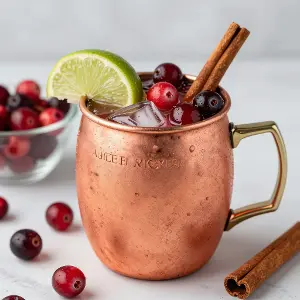
The Spiced Cranberry Mule takes the classic Moscow Mule template, spirit, citrus, ginger beer, and dresses it for the holidays with tart cranberry juice and warm baking spice. Vodka and lime juice keep the classic mule foundation intact, while cranberry juice adds a festive tartness and deep red color, and a touch of cinnamon or other warm spice pushes the drink firmly into November-through-December territory. Served in the traditional copper mug with a handful of fresh or sugared cranberries floating on top, it looks the part of a holiday centerpiece drink while staying true to the simple, three-ingredient mule format that's made the original so popular for decades.
Every cranberry mule variation descends from the original Moscow Mule, a drink with a genuinely accidental origin story. In 1940s Los Angeles, vodka importer John Martin, Cock 'n' Bull pub owner Jack Morgan, and a business associate with a surplus of copper mugs combined forces to move unsold Smirnoff vodka and unsold ginger beer, and the resulting drink, vodka, ginger beer, and lime, served in a distinctive copper mug, became one of the first cocktails to make vodka fashionable in America. Cranberry itself took a different, much later path into cocktail culture. According to a history of cranberry cocktails published by PUNCH, cranberry juice entered the cocktail world in the mid-20th century largely through Ocean Spray's marketing of the Cape Cod, a simple vodka-cranberry pour, and later became a permanent bar fixture thanks to the Cosmopolitan's rise in the 1990s and 2000s.
Oddly enough, cranberry cocktails weren't always associated with Thanksgiving or Christmas despite cranberries being a fixture on the holiday table since the first Thanksgiving in 1621. For decades, food writers recommended wine over cocktails for the holiday season, and cranberry-based drinks stayed largely separate from the actual holiday meal. That started to shift in the mid-2000s as chefs and bartenders began building cocktails specifically around holiday flavors, and cranberry, already deep red, already tart, already sitting in everyone's refrigerator every November, was an obvious fit once bartenders started looking. The Spiced Cranberry Mule is a direct product of that shift, marrying an already-established cocktail format with an ingredient that took surprisingly long to become a proper cocktail staple.
Expect tart and spicy in equal measure. Cranberry juice supplies sharp, slightly bitter tartness that needs real sweetness to balance, which is why most recipes lean on simple syrup or a spiced simple syrup rather than plain sugar. Ginger beer brings its usual peppery heat and effervescence, and fresh lime juice adds a citrus edge that keeps the whole drink from tasting flat. The addition of warm spice, cinnamon, clove, or cardamom, either steeped into a simple syrup or added directly, is what separates this from a standard Cranberry Moscow Mule, giving it a baking-spice aroma that reads as distinctly wintry rather than just tart and fizzy. Vodka stays mostly in the background, providing backbone without competing with the more assertive cranberry and spice flavors up front, an approach shared by a popular version from The Speckled Palate, which builds its spiced version on rum rather than vodka but keeps the same tart-and-fizzy foundation.
The most straightforward version sticks close to a standard Cranberry Moscow Mule, simply adding a cinnamon stick or a dash of ground spice to an otherwise classic vodka-cranberry-ginger beer build. Others swap vodka for spiced rum, echoing the warmer, more dessert-adjacent profile found in a Spiced Rum Moscow Mule, which pairs naturally with cranberry's tartness and cinnamon's warmth. Bourbon drinkers often build a similar cranberry-and-spice mule on a whiskey base instead, following the same substitution logic that turns a Moscow Mule into a Kentucky Mule. For a lower-proof, brunch-friendly version, some recipes drop the ginger beer for sparkling wine instead, landing closer to a Cranberry Mimosa than a traditional mule.
Stay with tradition and serve it in a chilled copper mug, which keeps the drink cold longer and adds the distinctive metallic aroma mule drinkers expect; a tall glass works as a substitute if copper mugs aren't available. Build the drink over fresh ice, combining vodka, cranberry juice, lime juice, and a spiced simple syrup first, then topping with ginger beer last to preserve its carbonation. A handful of fresh or sugared cranberries dropped into the glass, along with a cinnamon stick used as a stirrer, finishes the presentation and reinforces the drink's seasonal identity at a glance.
This is a drink built for the exact stretch between Thanksgiving and New Year's: holiday dinners, Friendsgiving cocktail hours, or a festive welcome drink for a Christmas party. Its tart, spiced profile pairs well with roasted turkey, glazed ham, aged cheeses, or a spread of holiday cookies, and it works comfortably on a drink menu next to a communal Christmas Punch, giving guests an individually mixed option alongside a shared bowl.
The Spiced Cranberry Mule works because it borrows two things people already love, the mule's easy, foolproof format and cranberry's deep-red, unmistakably holiday-season flavor, and combines them with minimal fuss. It requires no special bartending skill, scales easily for a crowd, and looks the part sitting next to a holiday spread without demanding much beyond a bottle of ginger beer and a bag of fresh cranberries. As long as cranberries and copper mugs remain fixtures of the holiday season, the Spiced Cranberry Mule is likely to keep earning its spot on seasonal cocktail menus every winter.