Mix. Drink. Enjoy.
Discover amazing cocktail recipes and elevate your mixology game
Mix. Drink. Enjoy.
Discover amazing cocktail recipes and elevate your mixology game
Posted: October 14, 2025
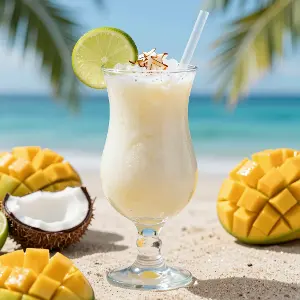
The Frozen Mango Coconut Daiquiri takes the classic rum-lime-sugar daiquiri formula and blends it into a thick, icy, tropical dessert of a drink — juicy mango, rich coconut cream, and a splash of fresh lime, all whipped with white rum and ice until smooth. It's a modern, blended cousin of the Classic Daiquiri, closer in spirit and texture to a Piña Colada than to the crisp, shaken original, and it's built entirely around indulgence rather than restraint — thick, frosty, and sweet enough to double as a poolside dessert.
The Daiquiri's origin story is one of the best-documented in cocktail history. It takes its name from Daiquirí, a small mining town on the southeastern coast of Cuba, where American mining engineer Jennings Cox is credited with inventing the drink in 1898. As the story goes, Cox ran out of gin while entertaining guests one evening and improvised with what was on hand instead: local white rum, fresh lime juice, and sugar, shaken with ice. His guests reportedly balked at his suggested name, "rum sour," and settled on "Daiquiri" instead, after the town where they were working. The drink might have stayed a regional curiosity if not for U.S. Navy admiral Lucius W. Johnson, who encountered it in Cuba around 1909 and brought the recipe back to the Army and Navy Club in Washington, D.C. From there it spread through American bars, gaining real momentum during Prohibition as American tourists flocked to Cuba for legal drinking and came home requesting the cocktail they'd discovered there. Difford's Guide's account of the Daiquiri's history traces this same path from a Cuban mining camp to a cornerstone of American bar culture.
The frozen, blended daiquiri familiar today is a later, mid-20th-century evolution of Cox's original shaken recipe, popularized as electric blenders became common bar equipment and bartenders in Cuba and Florida began experimenting with fruit purées in place of straight lime juice. Mango and coconut are two of the most popular of those fruit additions, playing off the same tropical, rum-forward template used in drinks like the Banana Daiquiri and the Bahama Mama, both of which lean on blended or shaken fruit to turn a simple rum sour into something closer to a tropical milkshake.
The dominant flavor is ripe, sweet mango, rounded out by coconut cream's rich, slightly nutty sweetness and thickened texture. White rum provides a clean, crisp backbone rather than a heavy, spirit-forward punch, letting the fruit stay front and center, while fresh lime juice adds just enough acidity to keep the whole drink from tasting flat or overly sweet. The texture is as much a part of the experience as the flavor — thick, cold, and slushy rather than thin and liquid, meant to be sipped slowly through a straw rather than downed quickly. It's an indulgent, dessert-adjacent cocktail, sweeter and creamier than a classic shaken Daiquiri, with more in common texturally with a smoothie than with a traditional sour.
Combine 2 oz white rum, 1 cup frozen mango chunks, 2 oz coconut cream, and 0.5 oz fresh lime juice in a blender with a cup of ice. Blend until completely smooth and thick, adding a splash of coconut water or more ice as needed to reach the right consistency — thick enough to hold its shape but pourable into a glass. Pour into a hurricane or large coupe glass and garnish with a mango slice, a wedge of lime, or a sprinkle of toasted coconut flakes for texture. Using frozen mango instead of fresh keeps the drink properly cold and slushy without watering it down with extra ice, a technique A Couple Cooks' frozen mango daiquiri recipe also recommends for getting the right slushy consistency without a heavy ice taste.
The frozen daiquiri format is endlessly adaptable, and this mango-coconut version is just one popular branch of a much larger tree. Swapping mango for fresh peach nods toward the site's own Peach Daiquiri, while a splash of blue curaçao in place of some of the mango produces something closer to a Blue Daiquiri in color and citrus profile. For an even richer, more dessert-like drink, some bartenders swap plain white rum for coconut rum, which amplifies the coconut flavor at the cost of extra sweetness — worth balancing with a slightly heavier pour of lime juice. Pineapple, passion fruit, and strawberry are all common substitutes or additions for drinkers who want to vary the tropical fruit profile from batch to batch.
This daiquiri is built for poolside and beach-vacation drinking, so it's typically served in a large hurricane glass, a stemmed coupe, or even a coconut shell for maximum tropical presentation. A mango slice, pineapple wedge, or toasted coconut rim are all popular garnishes, chosen for visual impact as much as flavor. It's a warm-weather, leisure drink through and through, equally at home at a backyard luau, a beach trip, or any gathering that calls for something closer to a frozen dessert than a classic cocktail — the same territory occupied by tiki staples like the Mai Tai.
More than 125 years after Jennings Cox first shook rum, lime, and sugar together in Cuba, the Daiquiri remains one of the most reinvented cocktails in the world, and its frozen, fruit-forward branch shows no sign of slowing down. Blended tropical daiquiris like this one owe their staying power to how well they deliver on the promise of a vacation drink: cold, sweet, visually striking, and easy to drink in the heat without the burn of a straight spirit-forward cocktail. Mango and coconut in particular have become one of the most reliable pairings in tropical drink-making, striking a balance between bright fruit acidity and rich, creamy sweetness that keeps drinkers reaching for a second glass.