Mix. Drink. Enjoy.
Discover amazing cocktail recipes and elevate your mixology game
Mix. Drink. Enjoy.
Discover amazing cocktail recipes and elevate your mixology game
Posted: October 11, 2026
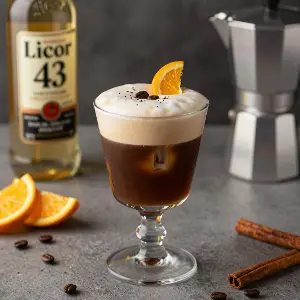
The Carajillo is a two-ingredient coffee cocktail that combines hot or chilled espresso with a spirit or liqueur. In its most popular modern form, the Mexican Carajillo, equal parts espresso and Licor 43 are shaken hard with ice and strained over fresh ice, creating a silky, foamy drink that tastes like a vanilla-scented iced latte with a warming kick. It is rich, sweet, bitter and aromatic all at once, and it has quietly become one of the most ordered after-dinner drinks in Mexico, Spain and, increasingly, the United States.
If you love an Espresso Martini but want something simpler and less boozy, the Carajillo is your new favorite. There is no vodka, no simple syrup and no complicated technique, just good coffee and a bottle of golden Spanish liqueur.
The Carajillo was born in Spain, where adding a splash of spirit to coffee has been a habit for well over a century. The most repeated origin story places it in Cuba during the Spanish colonial period, when Spanish soldiers supposedly mixed coffee with rum for coraje, or courage, before going into battle. Over time "corajillo" became "carajillo." Another theory says the drink took its name from busy cafe workers who wanted their coffee "que ara guillo", Catalan slang for "right away." Like many cocktail legends, neither story can be proven, but both capture the drink's spirit: fast, fortifying and unfussy.
In Spain, a carajillo is still usually served hot in a small glass, made with espresso and brandy, rum, whisky or the grape spirit orujo. In Catalonia and Valencia you may find a carajillo quemado, where rum is warmed and flamed with lemon peel, cinnamon and coffee beans before the espresso is added. You can read more about the drink's Spanish roots on Wikipedia's Carajillo entry.
The version most people order today comes from Mexico, where bartenders swapped brandy for Licor 43 and began serving the drink over ice. In cities like Mexico City, Monterrey and Guadalajara, the Carajillo became a standard sobremesa drink, the one you order while lingering at the table after a long lunch. Restaurants often make a show of it, shaking the espresso and liqueur tableside or building the drink in a rocks glass so the dark coffee slowly floats over the golden liqueur. In recent years Mexican restaurants across the U.S. have put it on their menus, and social media has turned it into a full-blown trend.
Licor 43, also known as Cuarenta y Tres, is a bright golden liqueur made in Cartagena, Spain. As its name suggests, it is crafted from 43 ingredients, including citrus, vanilla, herbs and spices. The flavor leans heavily toward vanilla, with notes of orange peel, caramel and warm spice. The brand traces its recipe inspiration to an ancient citrus liqueur from Roman-era Cartagena, and you can explore its story on the official Licor 43 website. That vanilla sweetness is exactly why it works so well with espresso: it softens the coffee's bitterness without needing any extra sugar.
A well-made Carajillo opens with the roasted, slightly bitter aroma of fresh espresso. On the palate, vanilla and citrus from the Licor 43 come forward, followed by caramel, cocoa and a gentle herbal finish. When shaken, the drink develops a creamy layer of foam on top, similar to a shaken espresso. When layered, you get a more dramatic visual and the flavors evolve as you sip, starting coffee-forward and finishing sweet.
It is noticeably sweeter than a hot spiked coffee like Irish Coffee, and lighter than creamy coffee drinks such as the White Russian. Because Licor 43 is only around 31 percent alcohol, the Carajillo is approachable and easy to sip slowly.
The classic Mexican ratio is equal parts espresso and Licor 43, about two ounces of each. Freshly pulled espresso gives the best flavor and foam, but strong cold brew concentrate or moka pot coffee will work in a pinch. There are two popular methods. For the shaken style, add both ingredients to a shaker with plenty of ice, shake hard for 10 to 15 seconds and strain into a rocks glass over fresh ice. For the layered style, fill a glass with ice, pour in the Licor 43, then slowly pour the espresso over the back of a spoon so it floats on top.
Some bartenders like a ratio of one part espresso to one and a half parts liqueur for a sweeter drink, while coffee lovers often go the other way. A few coffee beans make an elegant garnish, and a twist of orange peel adds a bright aroma that echoes the citrus in the liqueur.
The traditional Spanish Carajillo uses brandy, and Spanish brandy de Jerez is a delicious choice when you want a hot version on a cold evening. Rum-based Carajillos are common in Catalonia, and a dark aged rum makes an especially rich drink. Some modern bars add a splash of coffee liqueur for a deeper roast flavor, a pinch of cinnamon, or a float of cream for a dessert-style serve. Others top the drink with a sprinkle of cocoa or use reposado tequila alongside the Licor 43 for a stronger, agave-tinged twist. If you enjoy bitter coffee cocktails, the Coffee Negroni is another excellent option.
Serve the Carajillo in a rocks glass or a short tumbler over large ice cubes. In Mexico it often arrives with the espresso and liqueur still separated, and guests stir it themselves. If you are hosting, set up a small Carajillo station with a moka pot or espresso machine, a bottle of Licor 43 and a bucket of ice, and let guests build their own.
The Carajillo was made for the end of a meal. It pairs beautifully with churros, flan, tres leches cake, chocolate desserts and almond cookies. It is also a smart pick-me-up for long brunches and late nights, offering both caffeine and a gentle buzz. For more after-dinner ideas, browse our dessert cocktails or our slow sipping cocktails, or try a Spiked Iced Coffee on a hot afternoon.
The Carajillo hits a rare sweet spot: it is only two ingredients, it takes two minutes to make, and it tastes far more complex than it has any right to. It combines the ritual of coffee with the pleasure of a cocktail, and it carries centuries of Spanish and Mexican cafe culture in a single glass. For a detailed step-by-step guide, see this Carajillo recipe from Cocktail Society. Once you make one at home, it may well become your go-to way to end a dinner party.